

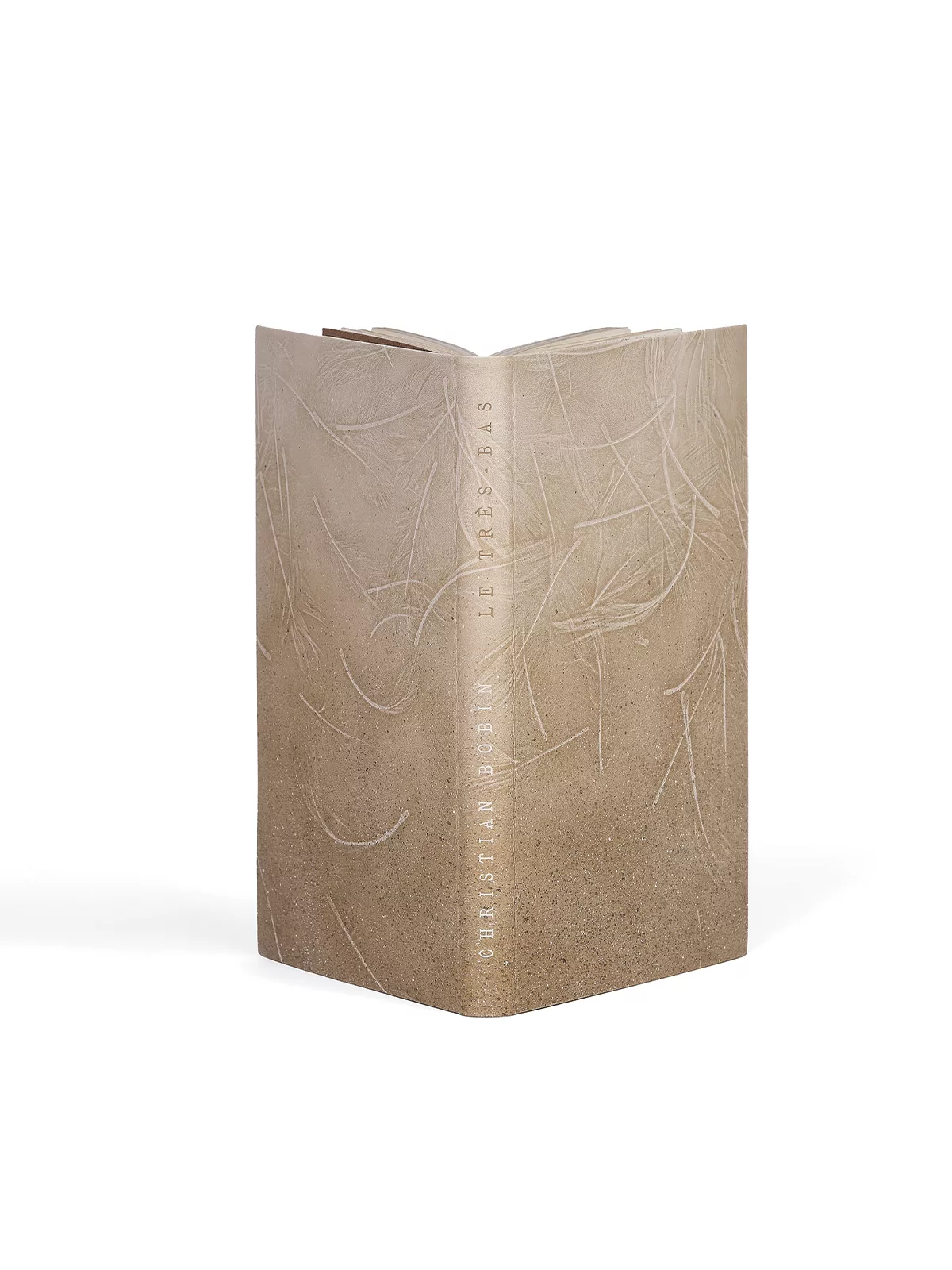
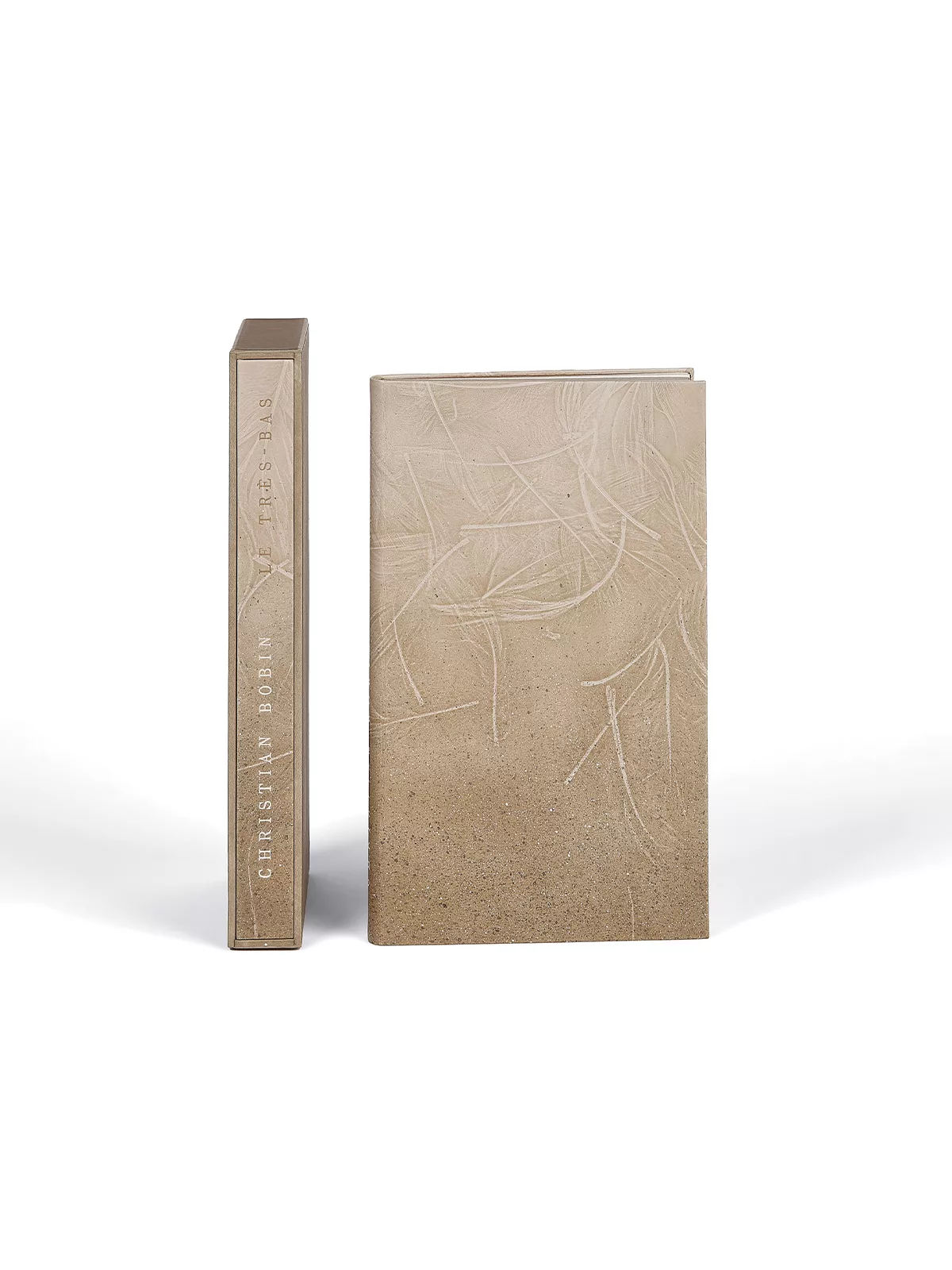
Le Très-bas
One of 31 copies on vélin (no. 24).
Le Très-Bas is neither a conventional biography nor a hagiography. It is a walk, in the manner Bobin favors, through the soul of Francis of Assisi, revisiting its least familiar images: the childhood of which the texts say nothing, the young man who reveled in life’s pleasures and dreamed of chivalry and beautiful princesses. If Francis of Assisi is a saint, it is because he was a “wonderful conductor of joy” and because he understood that “truth lies not in the knowledge one has of it but in the enjoyment it gives.”
Christian Bobin appears to have found in the life of Francis of Assisi a faithful illustration of the path running through his entire body of work (among others, La Part manquante, Éloge du rien, La Souveraineté du vide), in which solitude is a substance in itself — more grace than curse, deeply rooted since the sudden death of his companion in the summer of 1995, a bereavement he recounts in La plus que vive (Gallimard, 1996).
Success came later, carried by the grace of this Très-Bas, devoted to the spiritual life of Saint Francis of Assisi: a poetic and spiritual work, an apology for humility and meditative solitude. Bobin addresses Francis of Assisi familiarly and himself takes on something of the figure of a barefoot Franciscan, drawing from his pen forms of happiness unknown to most: “He [Saint Francis of Assisi] has no taste for curses, that taste of the weak. His voice is calm, so calm that it draws near the poor who know nothing of the world but its barking. He takes the path of the Très-Bas, never that of the Très-Haut.”
In his daily life, this celebrated writer, far from the spotlight of literary fame, comes close to resembling the ascetic he describes: “My life,” he admits in his new book, Louise Amour, “had passed within books, far from the world, and without knowing it I had done with my reading what birds do by instinct with the bare branches of trees: they notch and work them until a twig comes free, soon knotted to others to build their nest.”