

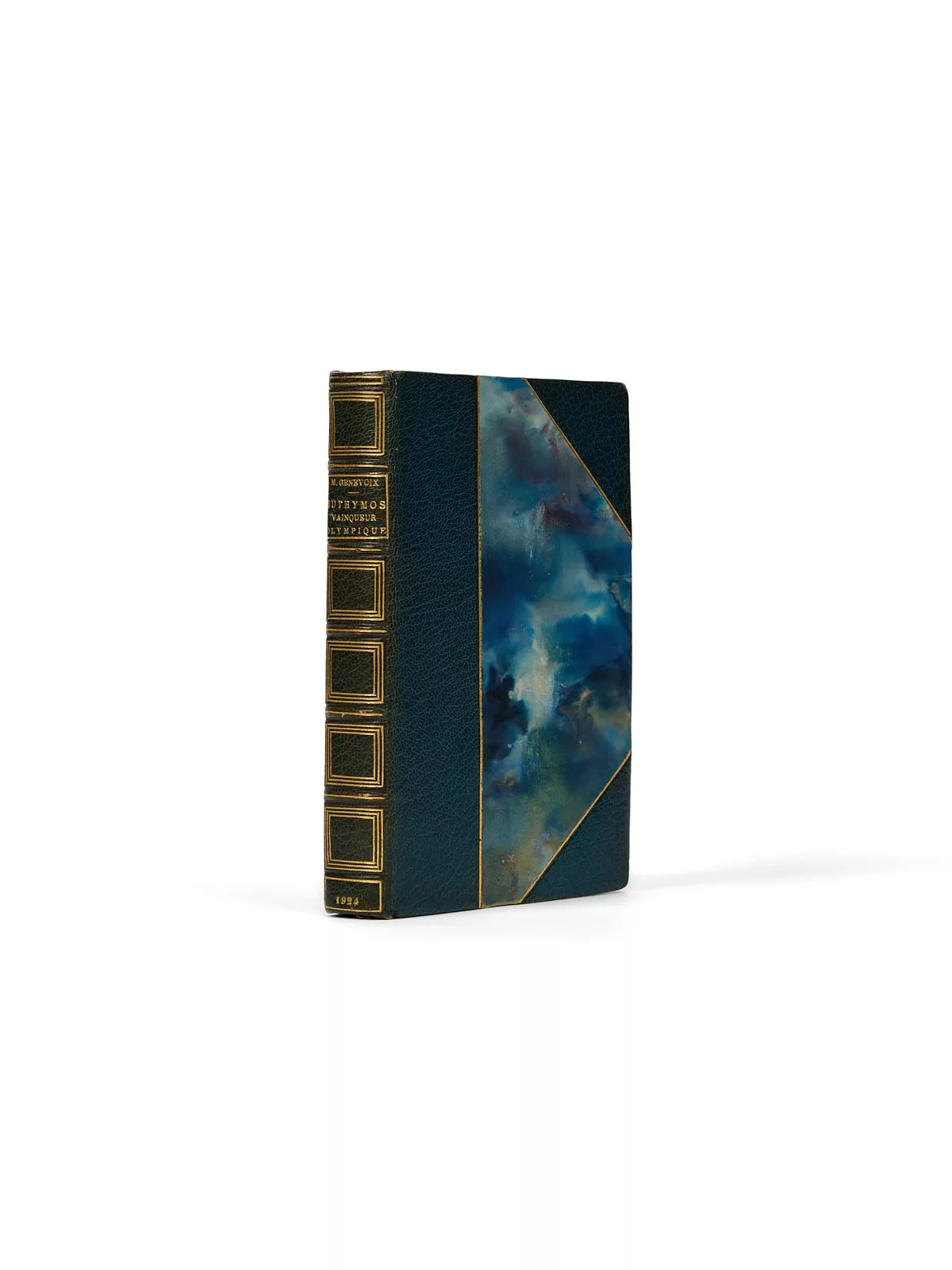
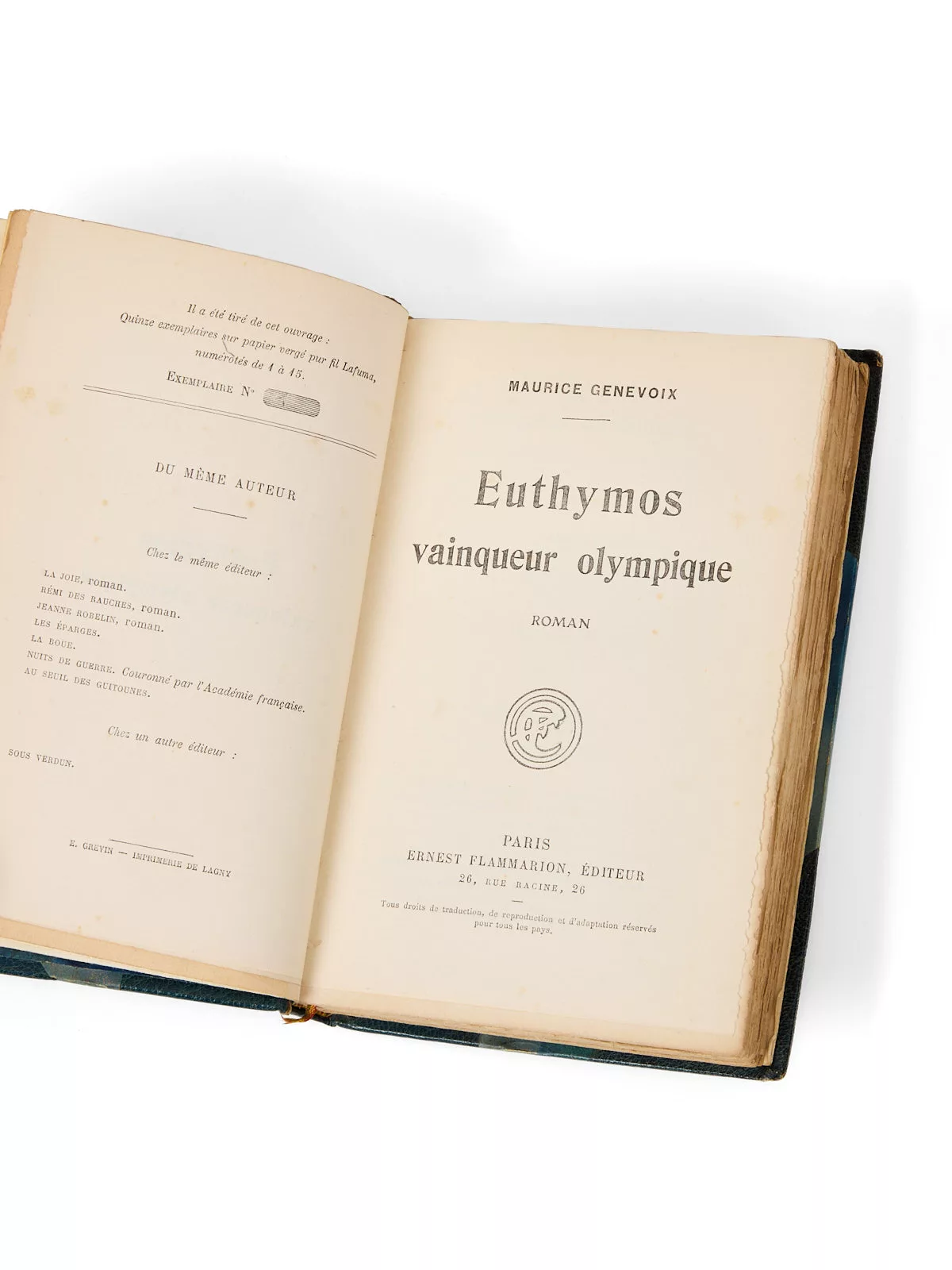
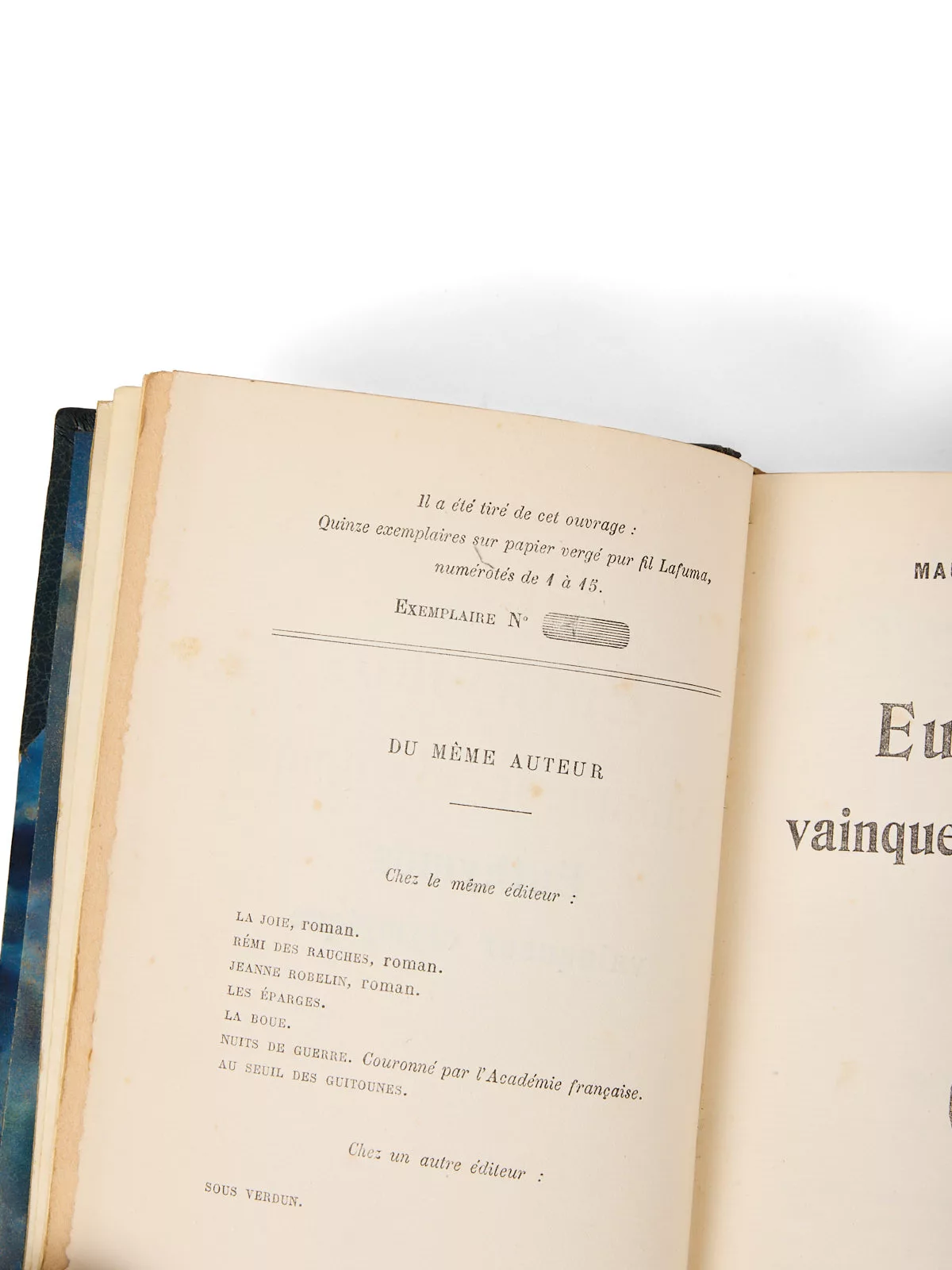
One of 15 first copies on vergé pur fil.
Maurice Genevoix's personal copy, kept in his library, in a binding identical to the other copies he had made for his favorite books.
During his schooldays in Orléans, Genevoix attended the Lycée Pothier, where he practiced gymnastics competitively and belonged, as he recalls in Trente mille jours, to the “glorious USLO [Union sportive du Lycée d’Orléans], school champion of the Centre-Ouest,” devoted to a single sport, rugby, in which he played fly-half. He was nicknamed “Fouinotte” for “his eye and his skill at snatching the oval ball from between the hookers’ feet.”
He continued his physical training during his two years of preparatory classes at the Lycée Lakanal in Sceaux. Legs, and mind alike: for the oral examination for entry to the École Normale Supérieure on the rue d’Ulm, Genevoix chose as his “special subject”: “The Olympic Games.” He passed the examination brilliantly, finishing “cacique,” that is, first in the entrance competition. He immediately chose to complete one of the two years of his military service, as was permitted for students admitted to the Grandes Écoles: posted to Bordeaux with the 144th Infantry Regiment, he refined his enjoyment of sport there, later developing it further at the Bataillon de Joinville — then known as the École normale militaire de gymnastique, founded in 1852 — which already gathered the finest athletes doing their military service.
In July 1914, Jean Guitton wrote, “Genevoix is master of his body, capable like a fine Olympian athlete of commanding every muscle — already, too, a master of language, of those words that are the inner muscles; he was a young Greek, as Plato imagined them.” This physical condition may well have saved his life when the time came to join the front at Verdun. He returned from the war maimed: sport, and indeed physical activity itself, became nothing more than a memory.
After his war-testimony novels, did Genevoix not seek, in writing Euthymos, to reclaim through the written word the physical virtuosity of his youth, of which the war had permanently deprived him? The writing was finished in April, and the book was ready for publication in June 1924: it appeared just days before the opening of the Paris Olympic Games, which began on 5 July 1924. It was after finishing the writing and publication of Euthymos that Genevoix began, from November 1924, writing Raboliot.
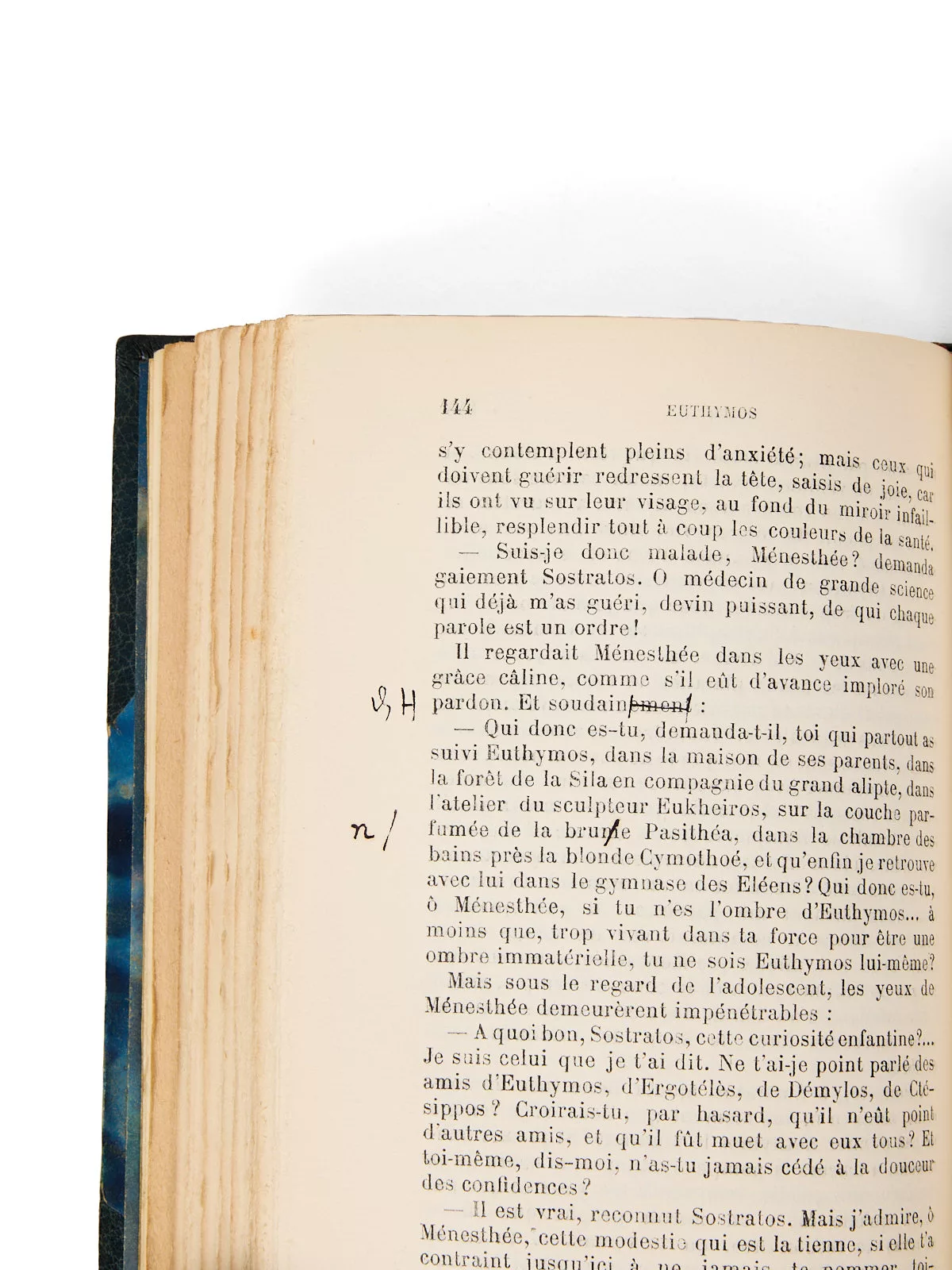
The copy contains several autograph corrections in pen.
A very fine copy.