

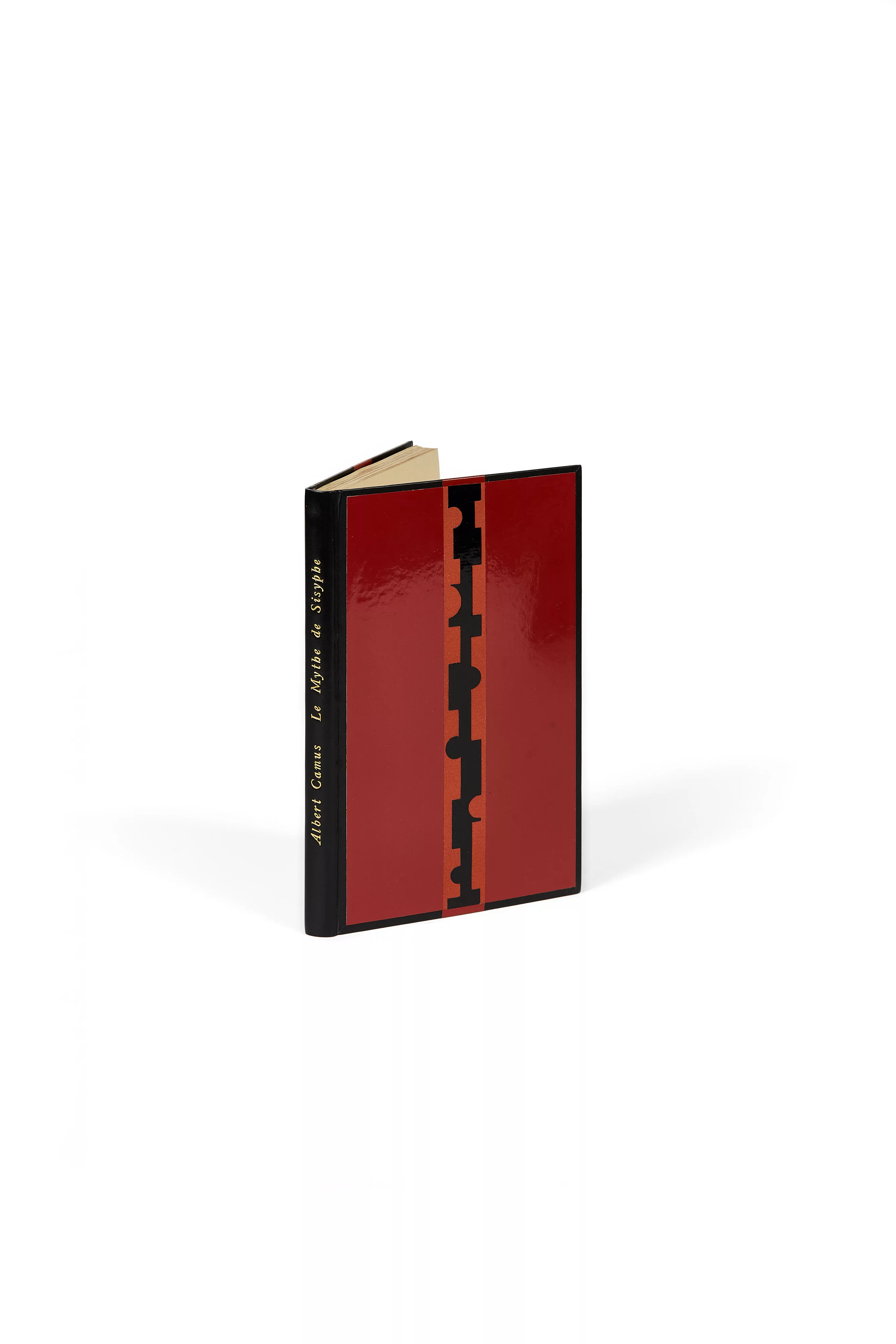
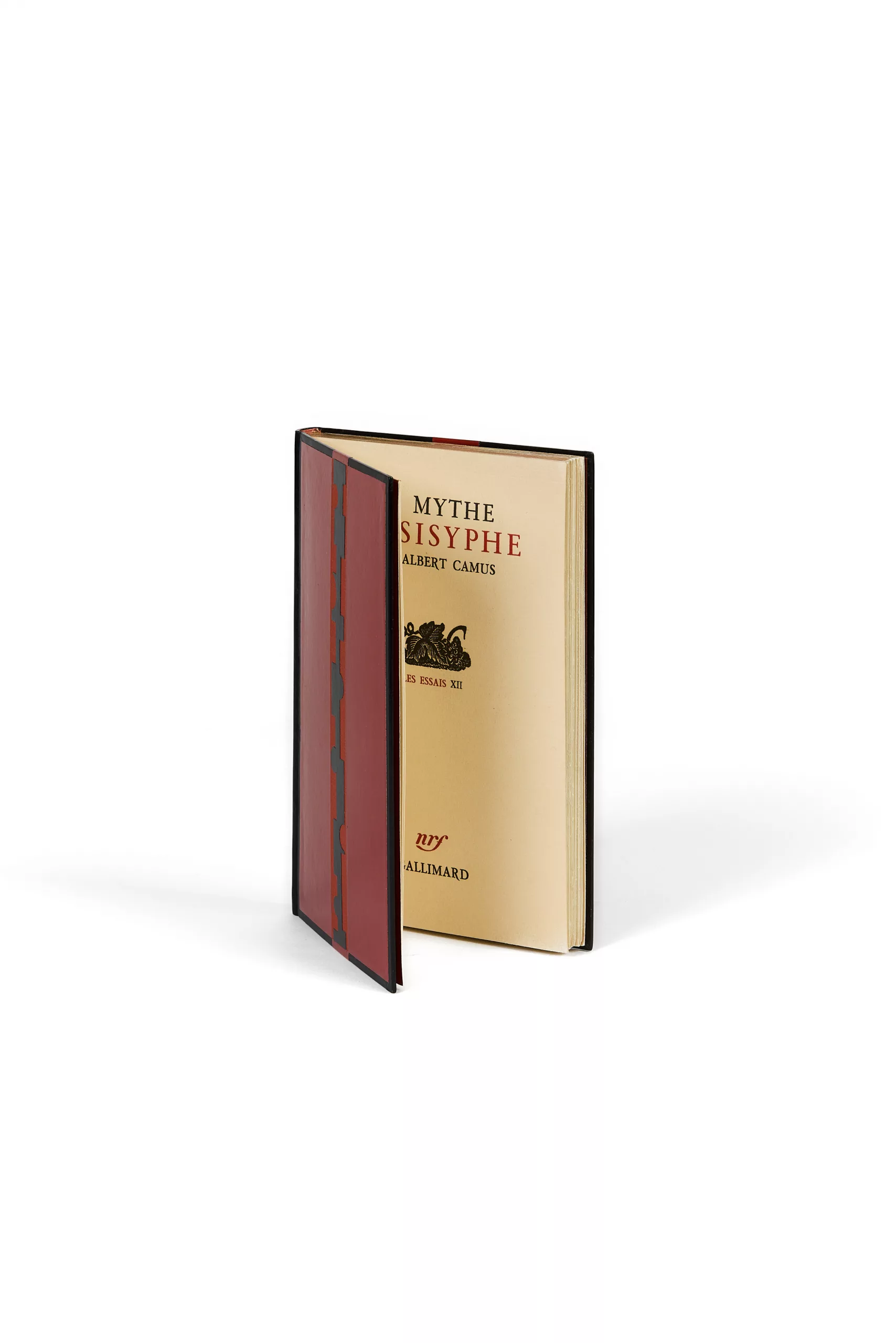
Le Mythe de Sisyphe
“Modern intelligence suffers from nihilism. To cure it, we are offered forgetfulness and a return to the past — a return to the Middle Ages, to the so-called ‘natural’ life, to religion, to the arsenal of old solutions. But to grant these remedies any efficacy would require denying the contribution of several centuries, feigning ignorance of what we now know, pretending to have learned nothing, erasing what cannot be erased. This is impossible. This essay, on the contrary, takes into account the enlightenment we have gained in our exile. It proposes that the mind live with its negations and make them the principles of progress. Toward modern intelligence, it acts in good faith and confidence. In this sense, it can only be regarded as a clarification, the preliminary definition of a ‘good nihilism,’ and, in short, a preface.” Thus Albert Camus formulated, in a letter to Gaston Gallimard of September 22, 1942, his plan for the publisher’s insert to Le Mythe de Sisyphe.
Le Mythe de Sisyphe appeared on October 16, 1942. Camus, on that day, was still at Le Panelier, in Haute-Loire. He had, the day before, sent Gaston Gallimard the manuscripts of Le Malentendu and Caligula. The second installment of the cycle of the absurd appeared four months after L’Étranger and was printed in 2,750 copies, plus 15 deluxe copies.
More than any other Camus title — some of which had even smaller deluxe issues (13 copies) — Le Mythe de Sisyphe is probably the rarest of all Camus titles on deluxe paper. We know of only 5 copies.
One of these was given to a young stockroom clerk at the Librairie Gallimard, who wrote to Camus fifteen years later: “I came to the NRF to have a copy of Le Mythe de Sisyphe inscribed. I was sixteen. I believe that encounter with Le Mythe was, for me as for many others, very important. But it took me a long time to truly understand what you had written: ‘to J.J.P., that he may go further.’ I did go further, but much later. It is true that in the meantime I had sold the book. It was a pur-fil copy.” The young stockroom clerk in question was Jean-Jacques Pauvert.
As early as February 1942, Raymond Queneau had informed Albert Camus of the “certain local difficulties” affecting a few pages of Le Mythe de Sisyphe. The chapter on Kafka, who was of Jewish faith, risked being censored by the German occupying authorities. It was therefore the chapter on Dostoevsky and suicide that was published instead. Marc Barbezat nonetheless published the text on Kafka in 1943 in the journal L’Arbalète; the text was reinstated, as an appendix, from the first postwar reprinting, in February 1945.
Camus had informed Malraux of this decision in March: “My dear Malraux. Thank you for your letter. I am eager to read your book on Lawrence and the ‘Struggle with the Angel,’ whose publication I am told of […] After many vicissitudes, Gallimard is producing L’Étranger (a version somewhat different from the one you know, and which owes much to you) and printing Sisyphe. I agreed to replace the chapter on K. [Kafka] with pages on the theme of suicide in Dostoevsky. It made no difference to me: both serve the same demonstration. I shall nonetheless try to publish the notes on K. in a journal.”
A precious copy, one of only two known bound by Pierre-Lucien Martin.