

Ah, the 1950s! The beginning of the Trente Glorieuses — the era of frantic economic growth and the first stirrings of a delirious consumer society. It was bound to fire the imagination of Boris Vian, who wrote this satire, subtitled “les arts ménagers” (household appliances). In this song, set to a swirling tango rhythm, the lyricist — and here, singer — popularized the first name Gudule (quite a feat!), but above all described a new method of seduction: instead of winning over the girl in question the old-fashioned way, with words of love, it was now more useful, in keeping with modernity, to reel off a list of products one could offer her. And what a motley list it is: “from the whisk for making vinaigrette to the fine air freshener for eating up smells, not forgetting electric blankets and the waffle iron” (Alexis Bartier, “Rafale de Vian,” Libération, March 2020).
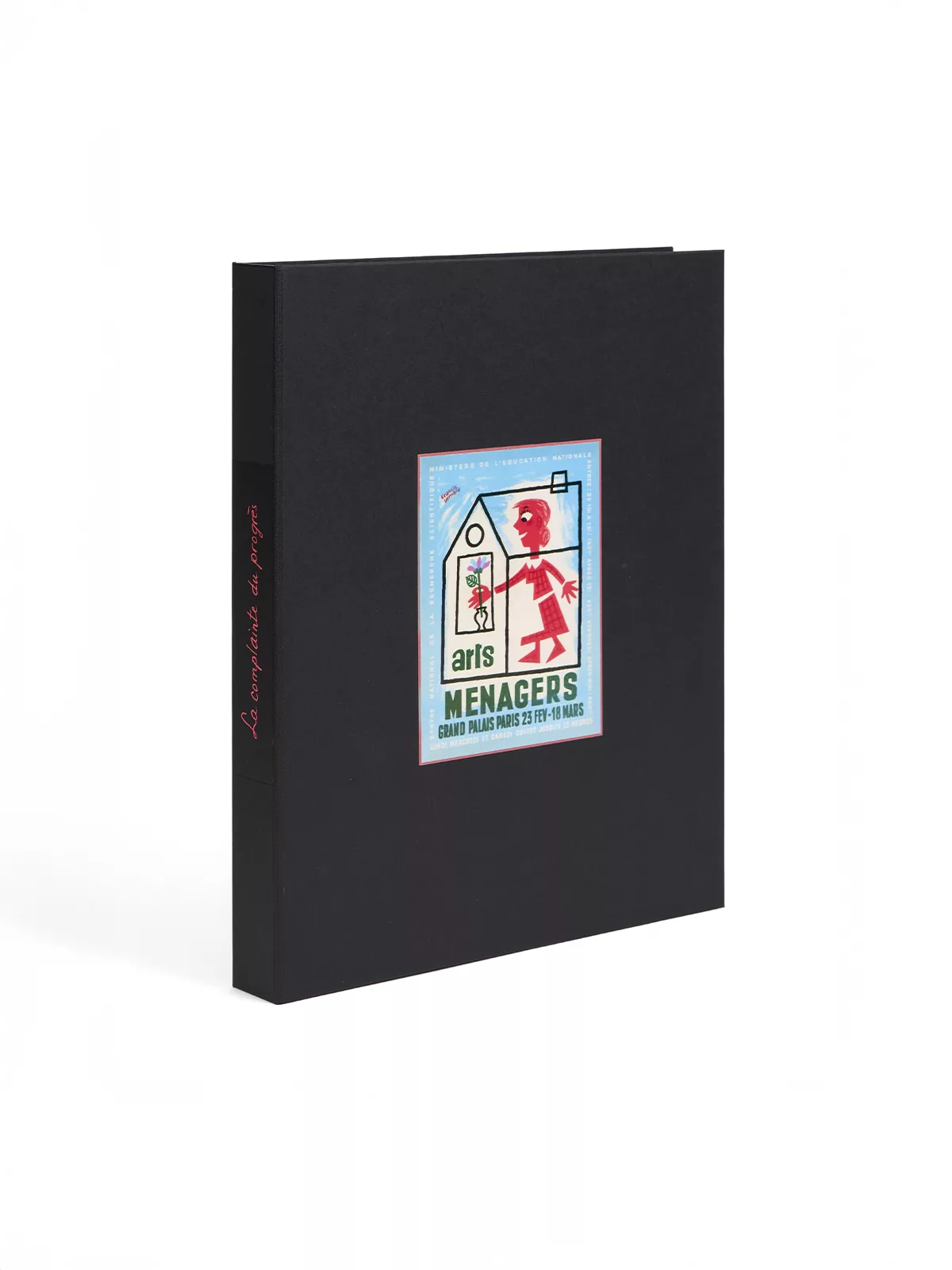
The song was recorded on Friday, 22 April 1955, at the Philips studios, requiring only two takes. It was in early 1956 that two 45s were released, titled Chansons impossibles (Boris Vian No. 1) and Chansons possibles (Boris Vian No. 2): the latter carried, on side A, “La Complainte du progrès” (subtitled “Les Arts ménagers”). Philips could not resist the opportunity, and promptly sent Boris Vian to promote the record in person at the Salon des arts ménagers, held from 23 February to 18 March 1956. The exhibition, reopened since 1948, was then booming, occupying the naves of the Grand Palais nearly seventy years before the book fairs would.
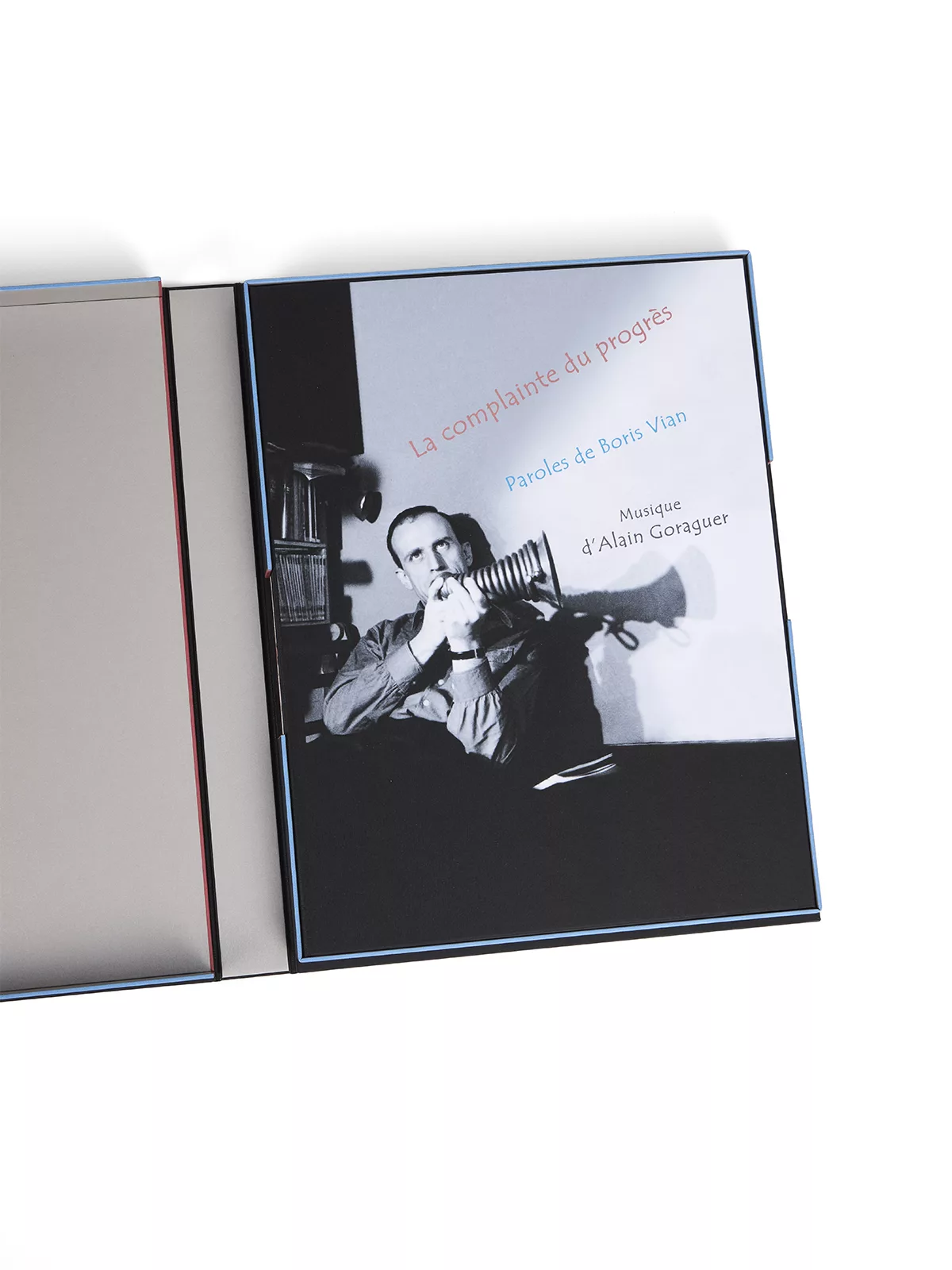
A month of housewives — and their husbands — parading through the fair, with Vian turned into a human sandwich board, walking the halls with Gudule playing in the background. He had himself photographed “with his head stuck through the exhibition poster” (Anatomie du bison, by our excellent colleagues and Boris Vian specialists Christelle Gonzalo and François Roulmann, p. 162). The only two brands named in the song, Frigidaire and Dunlopillo, had their own stands there. Whether Vian pushed the joke as far as humming his song in front of their booths remains unknown.
Attendance that year reached its historic peak: 1.5 million visitors! From 1961 onward, having outgrown its space, the fair had to move to the new “futuristic” CNIT building at La Défense, a symbol of a new way of living. Had he still been alive, Vian would surely have found inspiration there too.
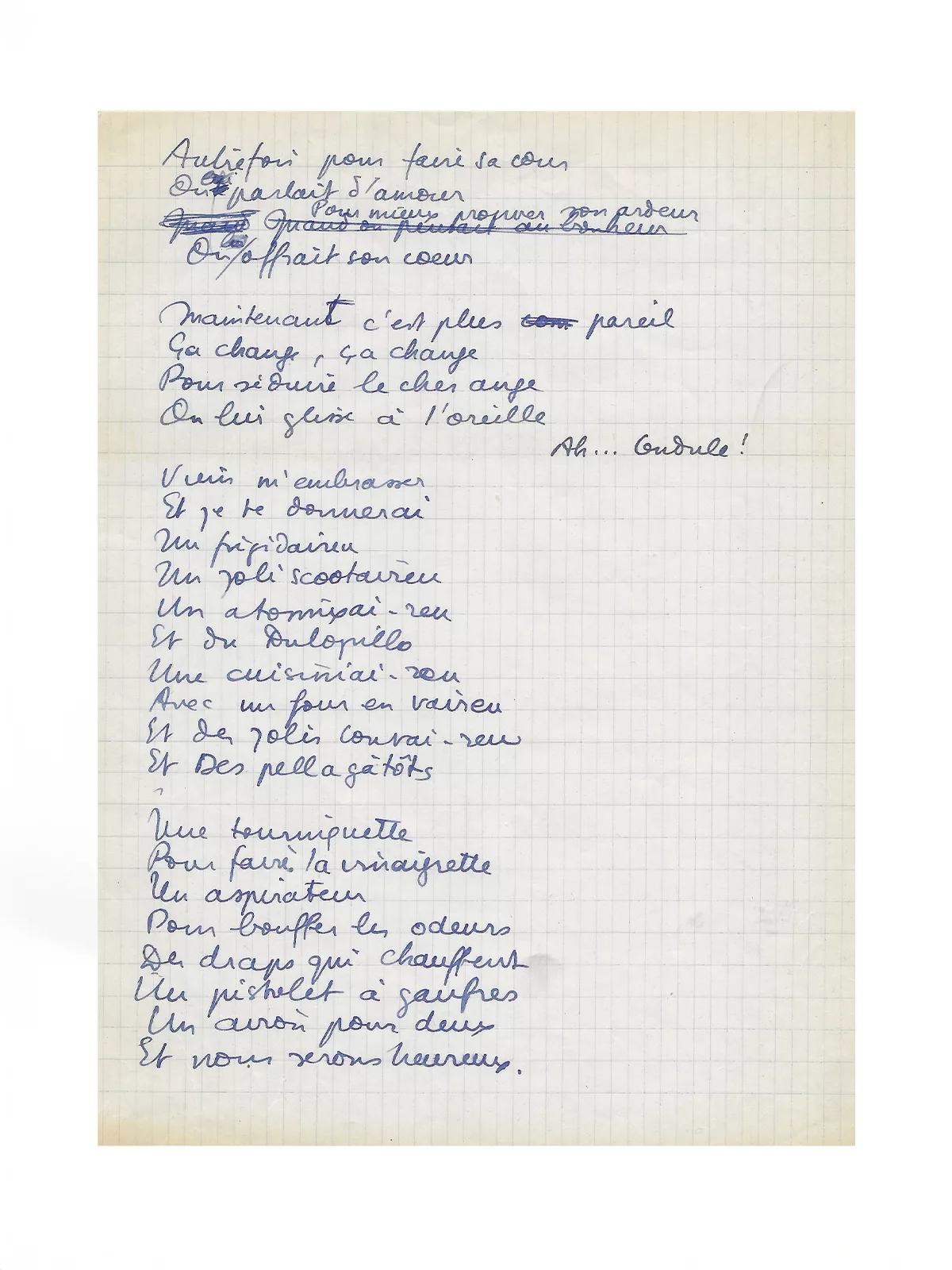
From his very first draft, Vian set down all his humor and second-degree wit, down to the deliberately altered spelling: “le joli scoutaire-reu (…) et sa cuisini-aire-reu, avec un four en ver-reu, et des jolis couvai-reu…”
Several variant versions illuminate the genesis and construction of the song, with the final adjustments to the text appearing in the two typescripts. The title itself went through several attempts: “Mon ourson,” “Le Progrès,” “Amour et frigidaire,” and finally “Complainte du progrès” on the last typescript. Notably, Vian dropped, at the very last moment, the final stanza:
“Et on vit comme ça
Jusqu’à la dernière fois
Mais on retombera
De Charybde en Scylla
Car elle cassera
Jusqu’au dernier plat”
perhaps too harsh on Gudule, who had already been through enough earlier in the song!
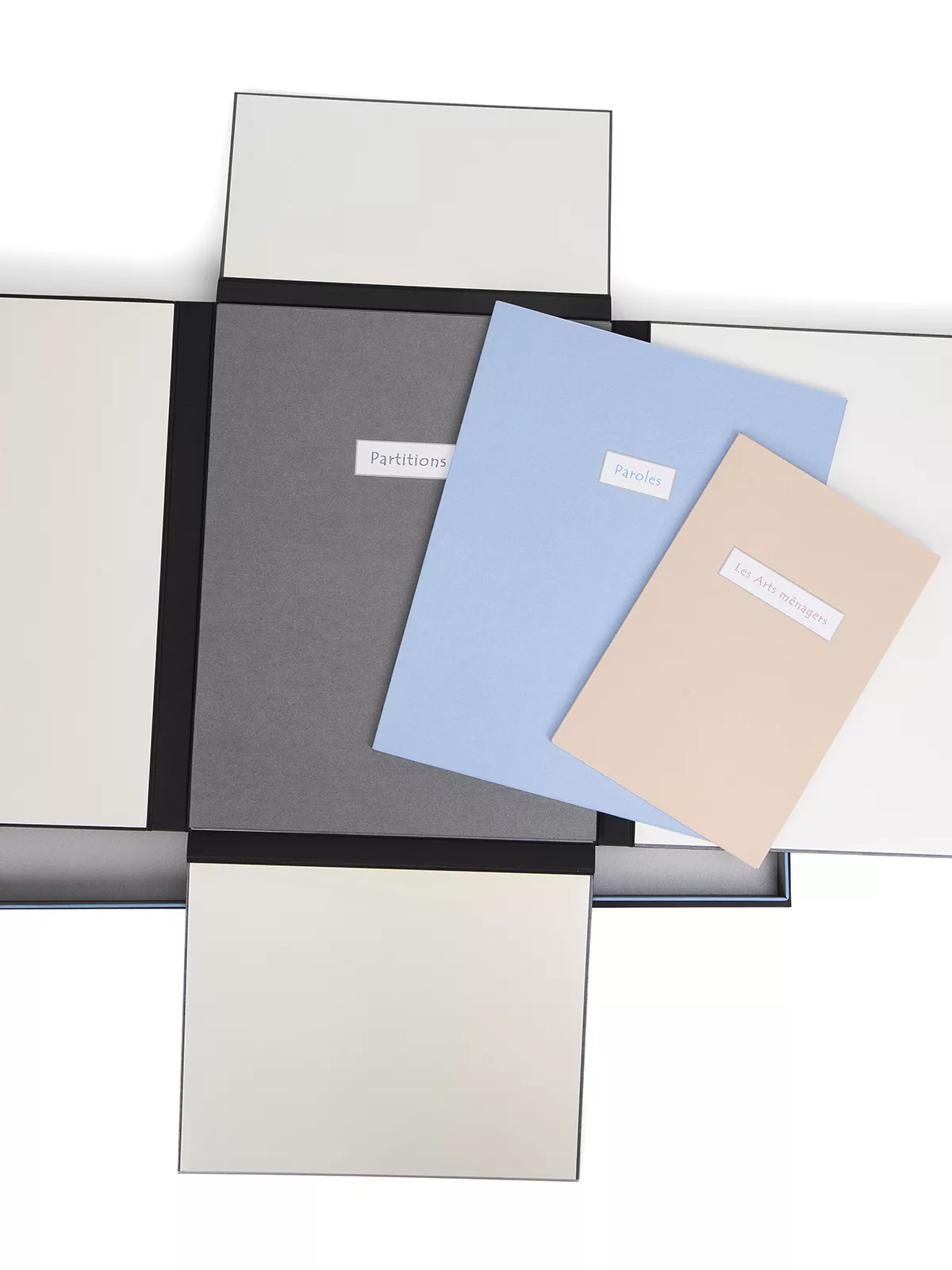
Accompanying the set are several documents: 2 period photographic prints of the Salon des Arts ménagers (a general view of the Grand Palais, and one of the Frigidaire stand), and 2 advertising blotters for the two brands named in the song: Dunlopillo and Frigidaire. The legendary waffle iron, however, is not included.