


La Peste
One of 35 copies on vélin de Hollande (no. XXVIII).
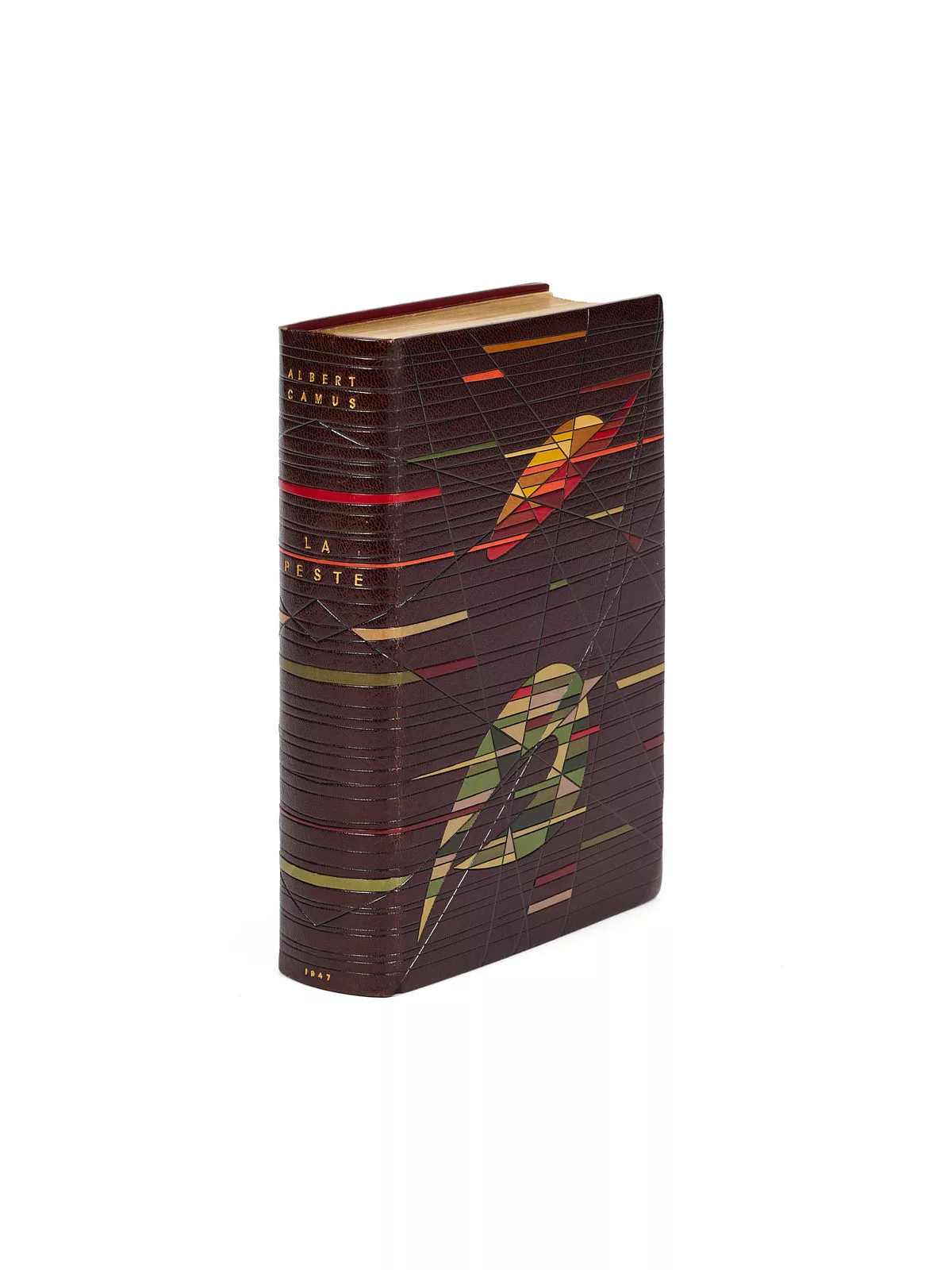
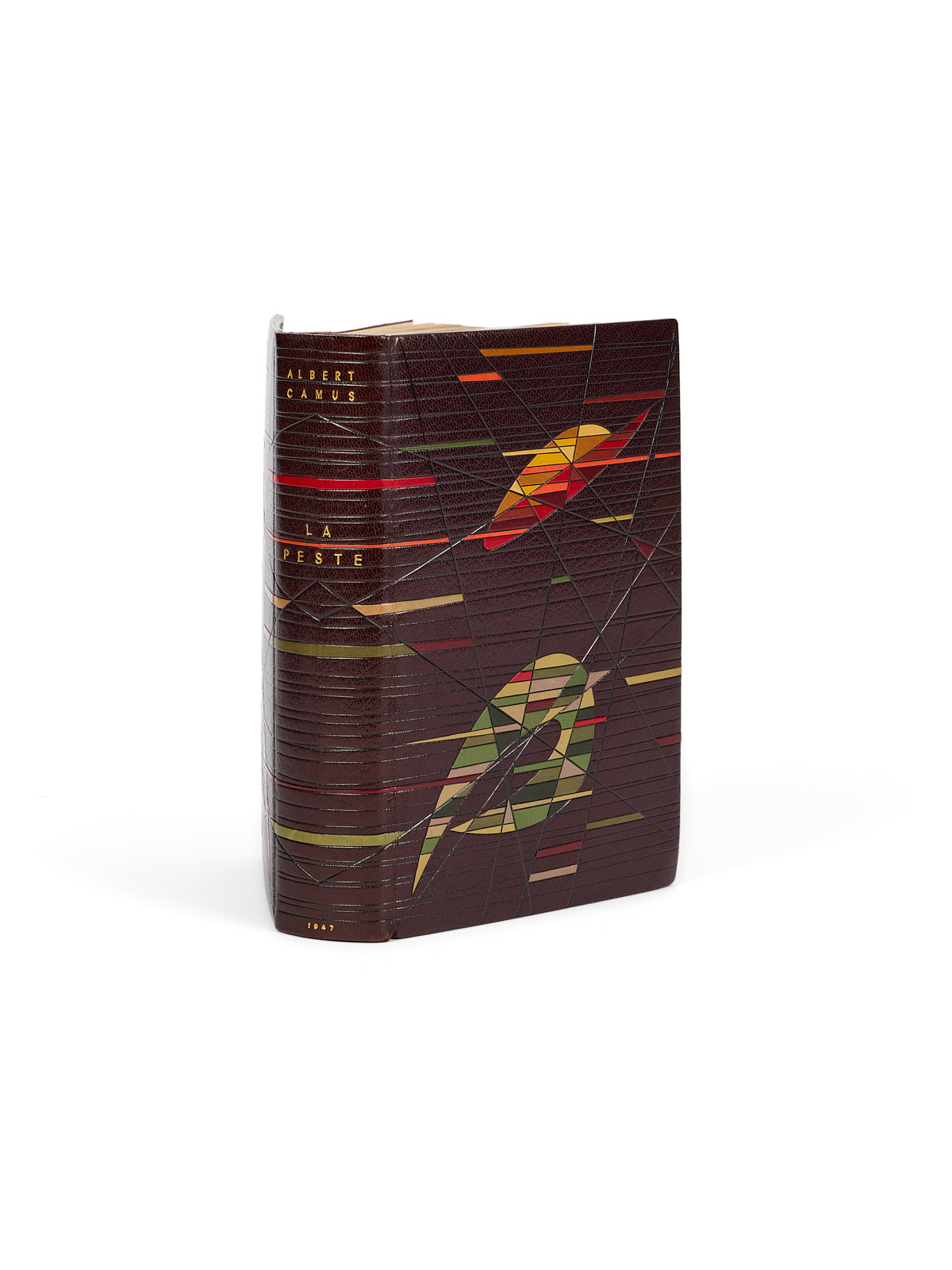
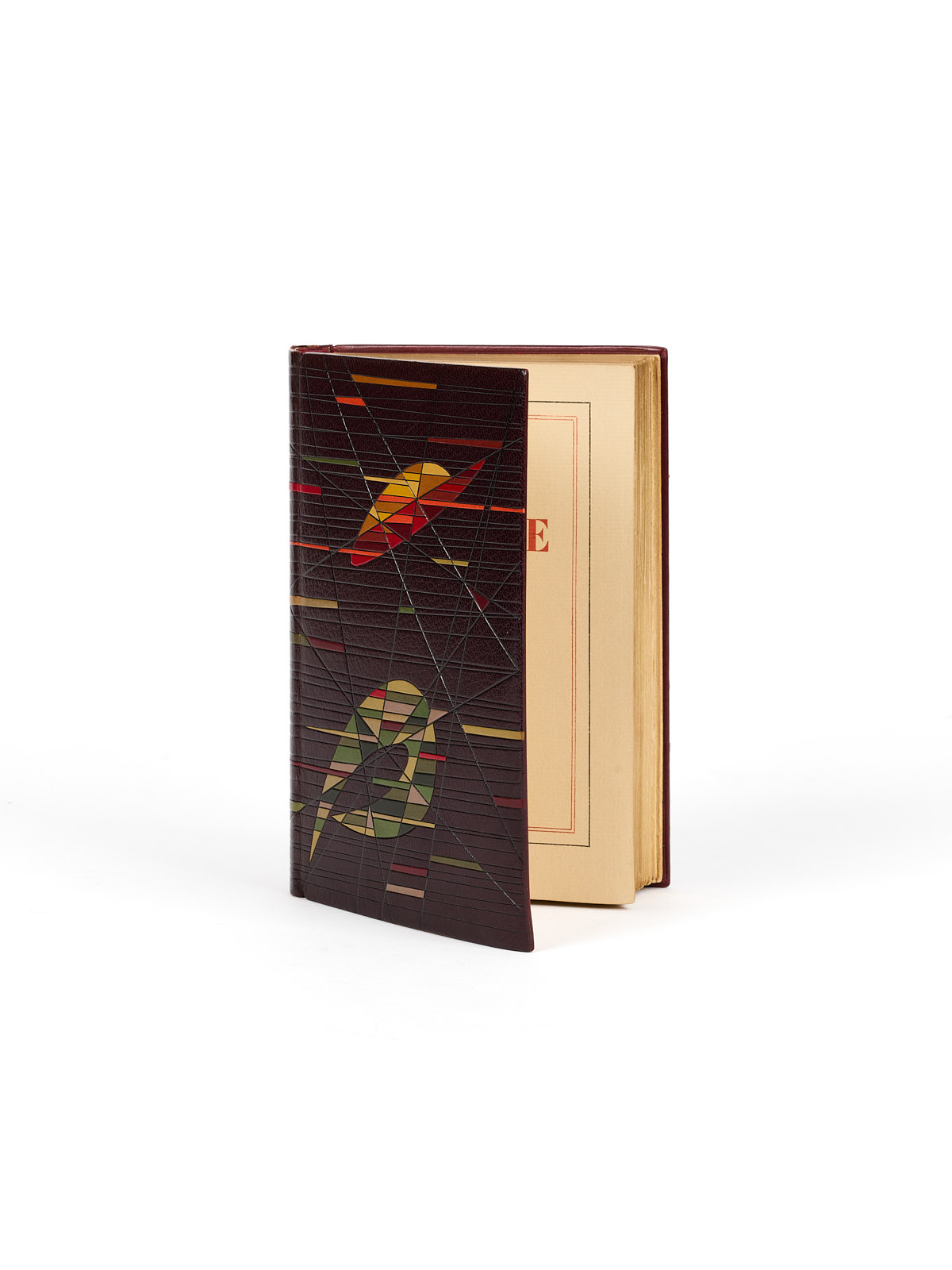
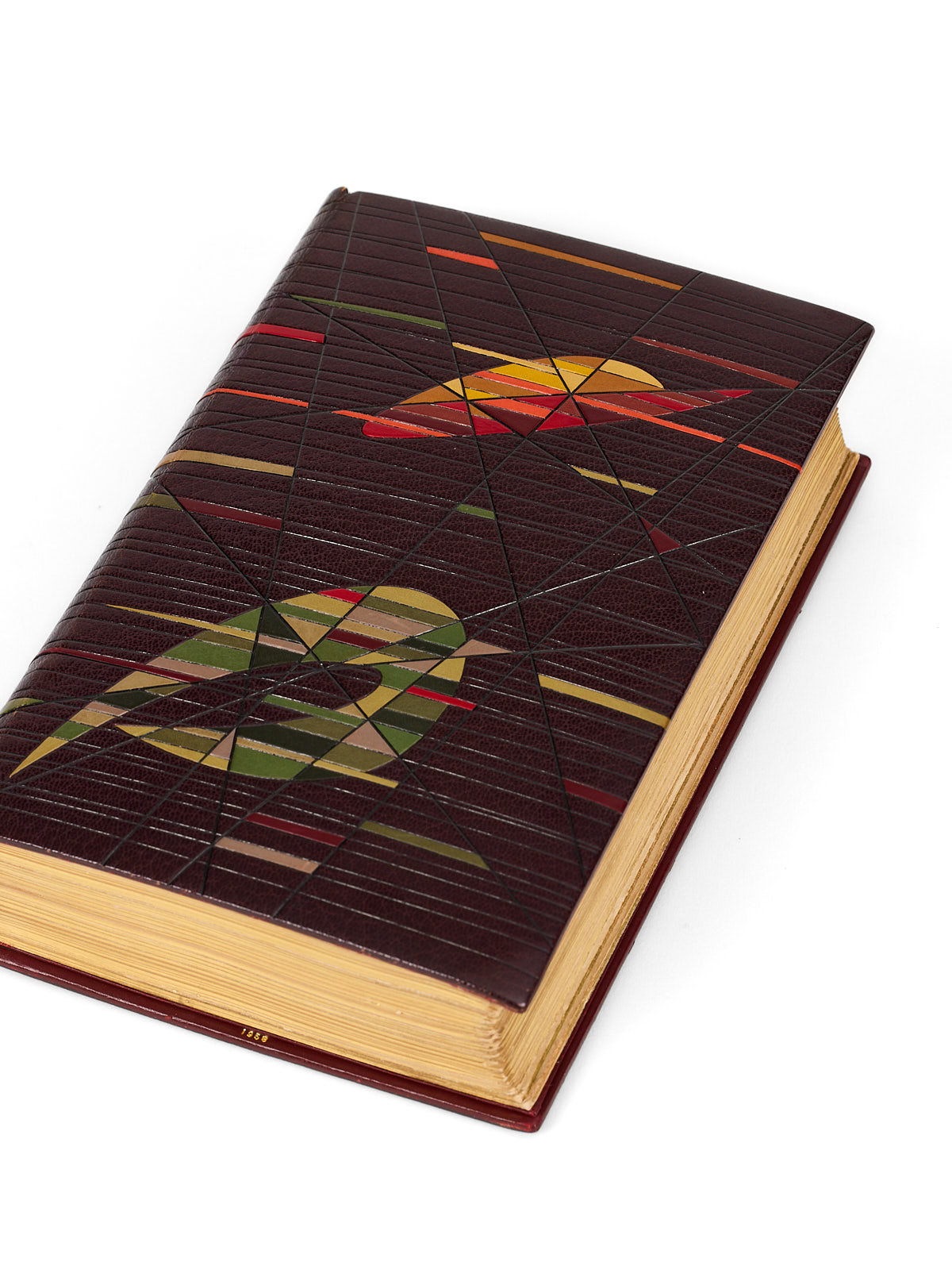
The second of three bindings by Paul Bonet on this title, based on a design which, by his own admission, “suits Camus’s work well.” Paul Bonet bound one copy on each of the deluxe papers: the Madagascar copy for himself, the Japanese-paper copy apparently for Professor Millot, and this Holland-paper copy for another of his important clients, the same collector to whom he would give, a few weeks later, his second binding for L’Étranger: Jean Davray.
Several other titles by Camus were treated with a similar design, executed and gilt by two of his greatest craftsmen: Desmules for the binding structure, and Raphaël for the gilding.
The final text of La Peste, whose first lines were written as early as 1942, was completed in December 1946. Camus set down the last word without joy: “I have the feeling that this book is a total failure, that I have sinned through ambition, and this failure is very painful to me. I am keeping it in my drawer, like something rather disgusting.” Camus was far from imagining that it would become a bestseller and a popular classic, the third best-selling title from Éditions Gallimard, after Le Petit Prince and L’Étranger. Translated into dozens of languages, the “Révolte” cycle would weigh heavily in the award of the Nobel Prize in Literature ten years later. “What we learn in a time of plague is that there are more things to admire in men than to despise,” Camus writes in La Peste. While showing humanity’s capacity for solidarity and struggle, Camus warns that the lessons of hardship must never be forgotten: “The plague bacillus never dies or disappears entirely.”
A magnificent copy of one of Albert Camus’s masterpieces, and certainly one of the most widely read works in the world.
A copy of the first order.