

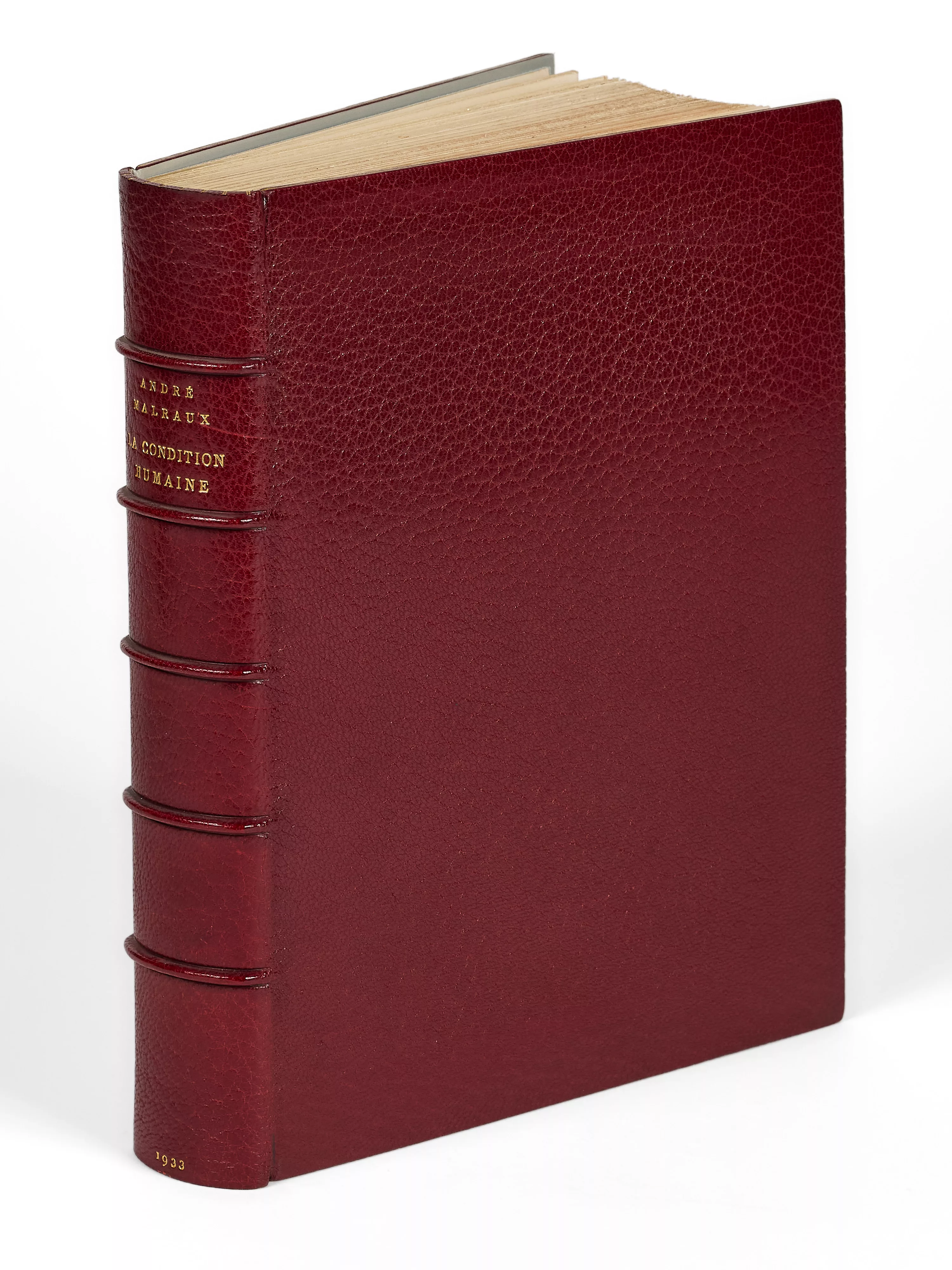
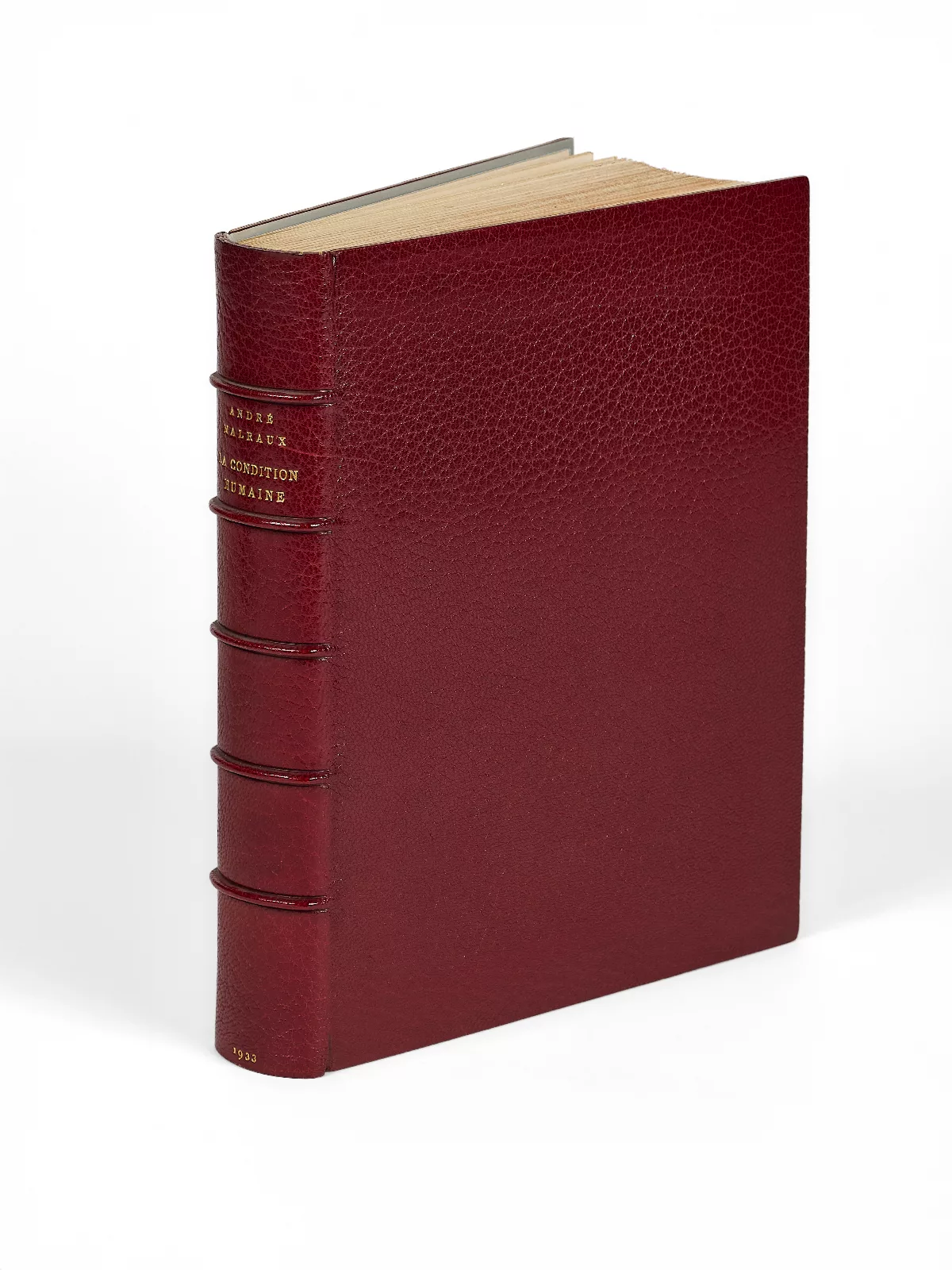
La Condition humaine
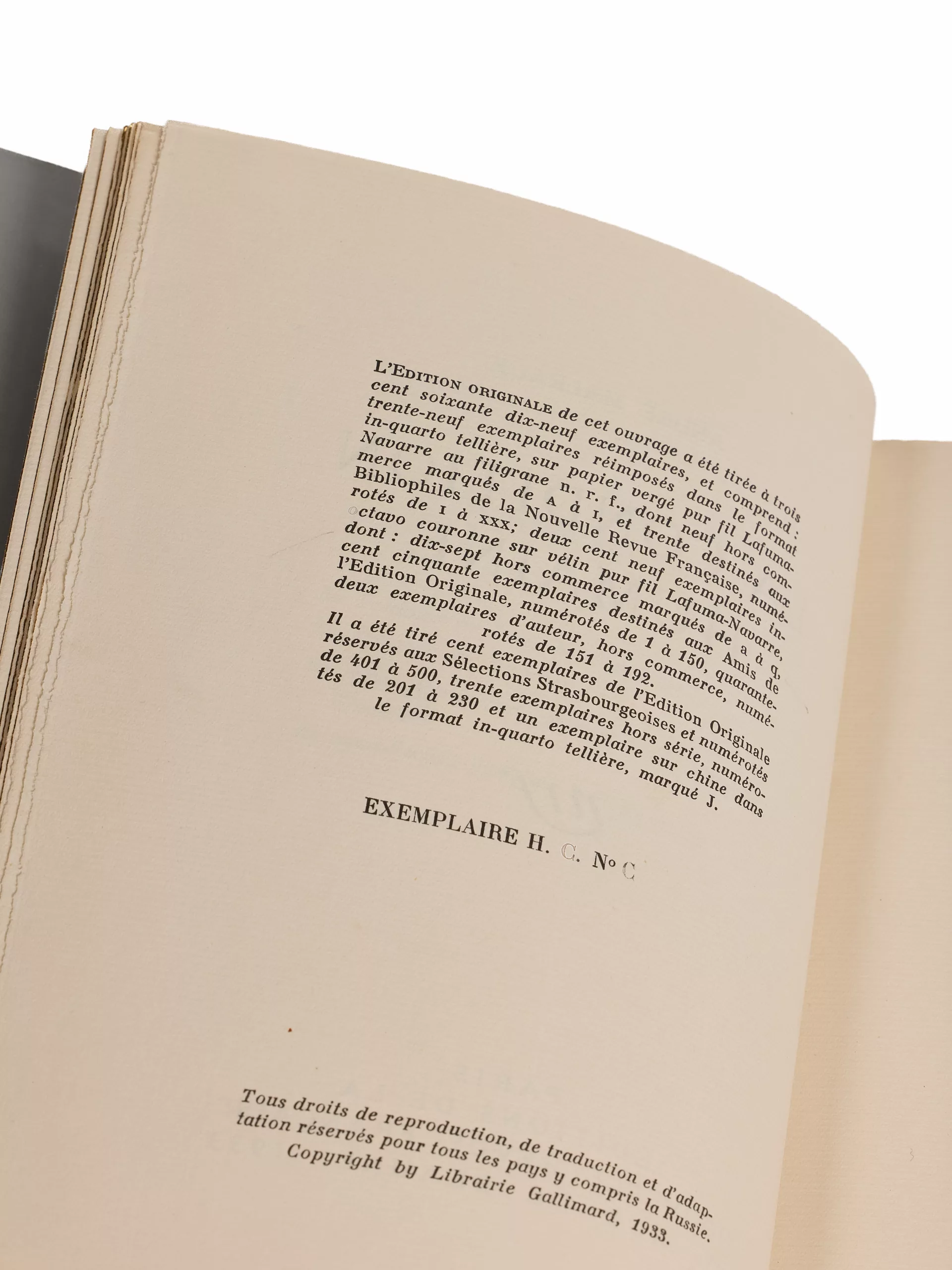
One of 39 copies from the deluxe réimposé issue on vélin pur fil, this one of 9 hors commerce copies (copy C), after a single copy on China paper.
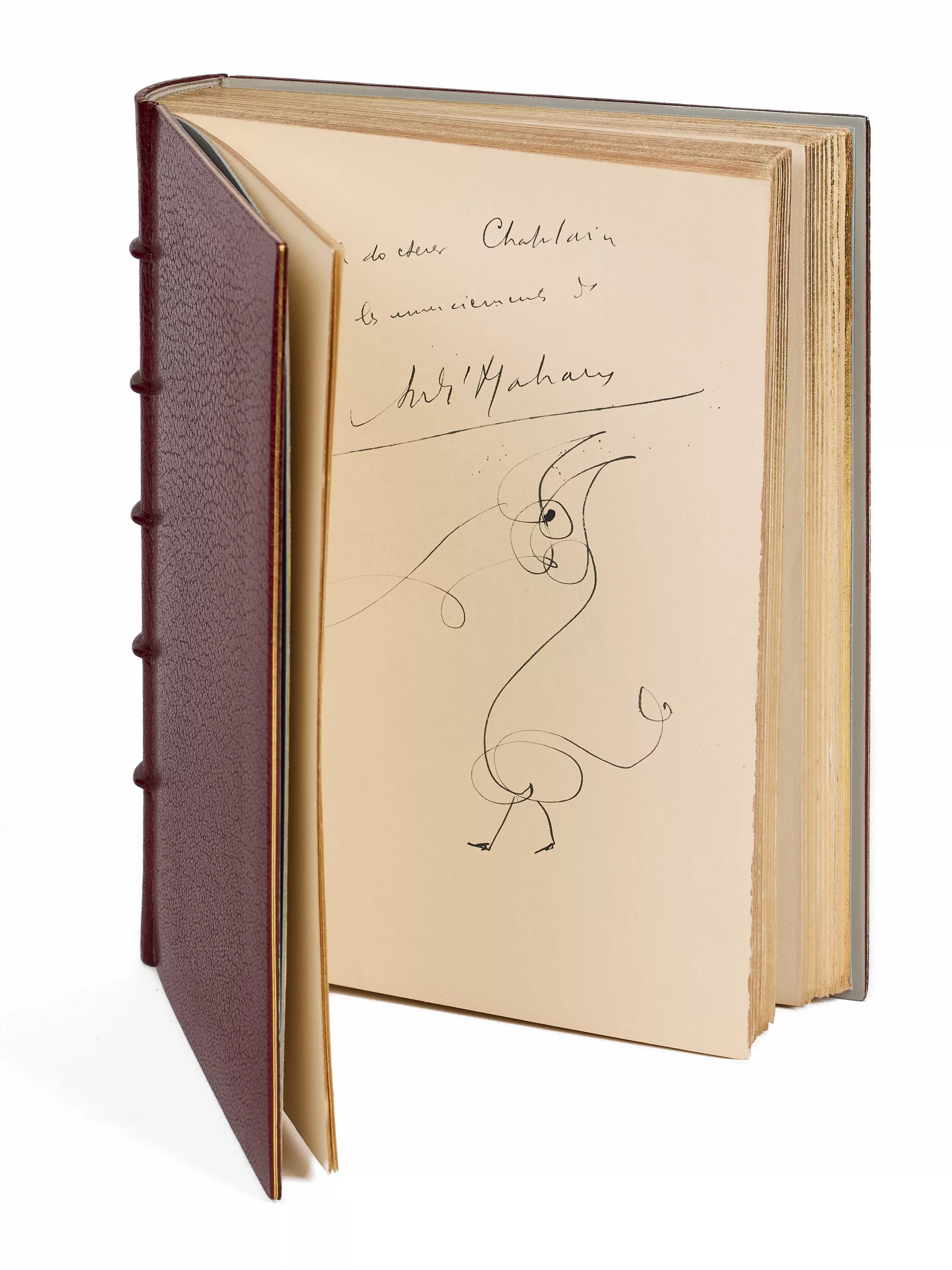
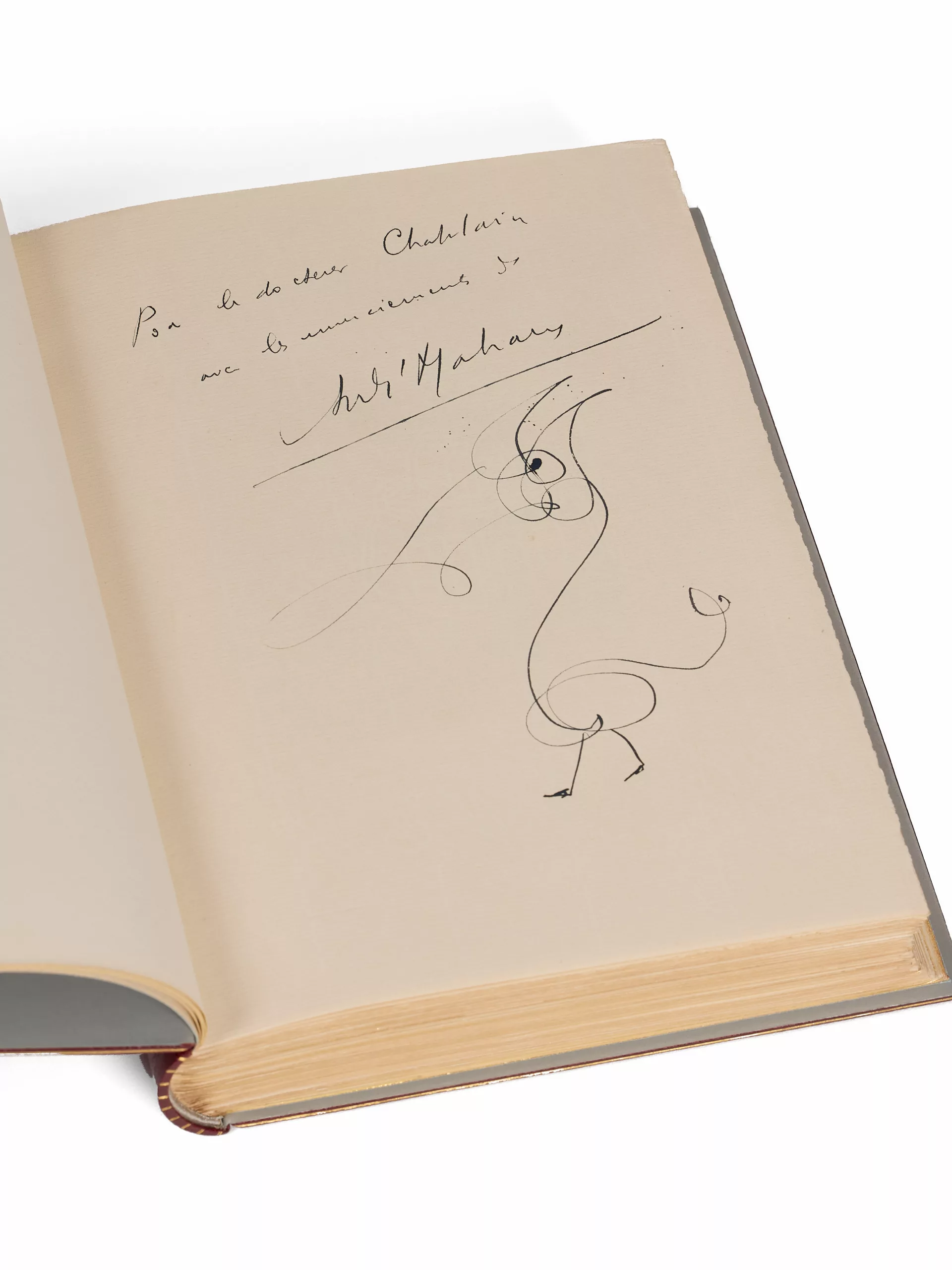
Signed presentation inscription: “Pour le docteur Chatelain, avec les remerciements d'André Malraux.”
The book is enriched with a large fantastical drawing of the kind Malraux often added to his letters and inscriptions from the very beginning of his literary career, as early as Royaume farfelu in 1921: he called these little figures his “dyables.” In L’Univers farfelu d’André Malraux, Marie-Josèphe Guers describes such sketches as “more arabesques than drawings, which does not prevent them from being evocative of a formidable expressive force. Depending on the moment, the inspiration and the impulse, they can approach the ideogram or calligraphy” (pp. 6–7). These “dyables” (the spelling is his own) were usually added in small format beneath his signature. A full-page example of this kind is exceedingly rare, all the more so on a réimposé copy of his most famous text.
Among the 19 réimposé copies of La Condition humaine we have been able to record — roughly half of the known corpus — we have found only two other inscribed copies: one bound by Martin, the other by Miguet. None of the four copies bound by Paul Bonet bears an inscription.
This was Malraux’s second book with the NRF, after Royaume farfelu, and his first novel. Eagerly awaited and closely watched, it was championed by Gaston Gallimard, who, a year after Céline had lost the Goncourt to Guy Mazeline’s Les Loups, wished to press the advantage with a title by an already celebrated “house” author. The strategy succeeded: the Prix Goncourt was awarded to Malraux on 7 December 1933.
In his official statement, the thirty-two-year-old writer declared: “It is customary, after any literary prize, to explain how and why the book one has written should please everyone. I want there to be no ambiguity about mine. I have tried to express the one thing that matters to me, and to show a few images of human grandeur.” The prize was awarded, on the fourth ballot, to André Malraux with five votes, against three for Charles Braibant’s Le Roi dort, one for René Béhaine’s La Solitude et le Silence, and one for Paul Nizan’s Antoine Bloyé.
Contemporary inscriptions on deluxe copies of this edition are rare, particularly on the deluxe issue.
That issue comprises only 39 copies, plus one author’s copy on China paper: the tradition of the famous “in-quarto tellière” réimposé format, established in 1919, came to an end in 1932. From 1933 onward, réimposé copies gradually disappeared, reserved thereafter for a handful of “house” authors such as Martin du Gard or Malraux, in print runs three to four times smaller than before.
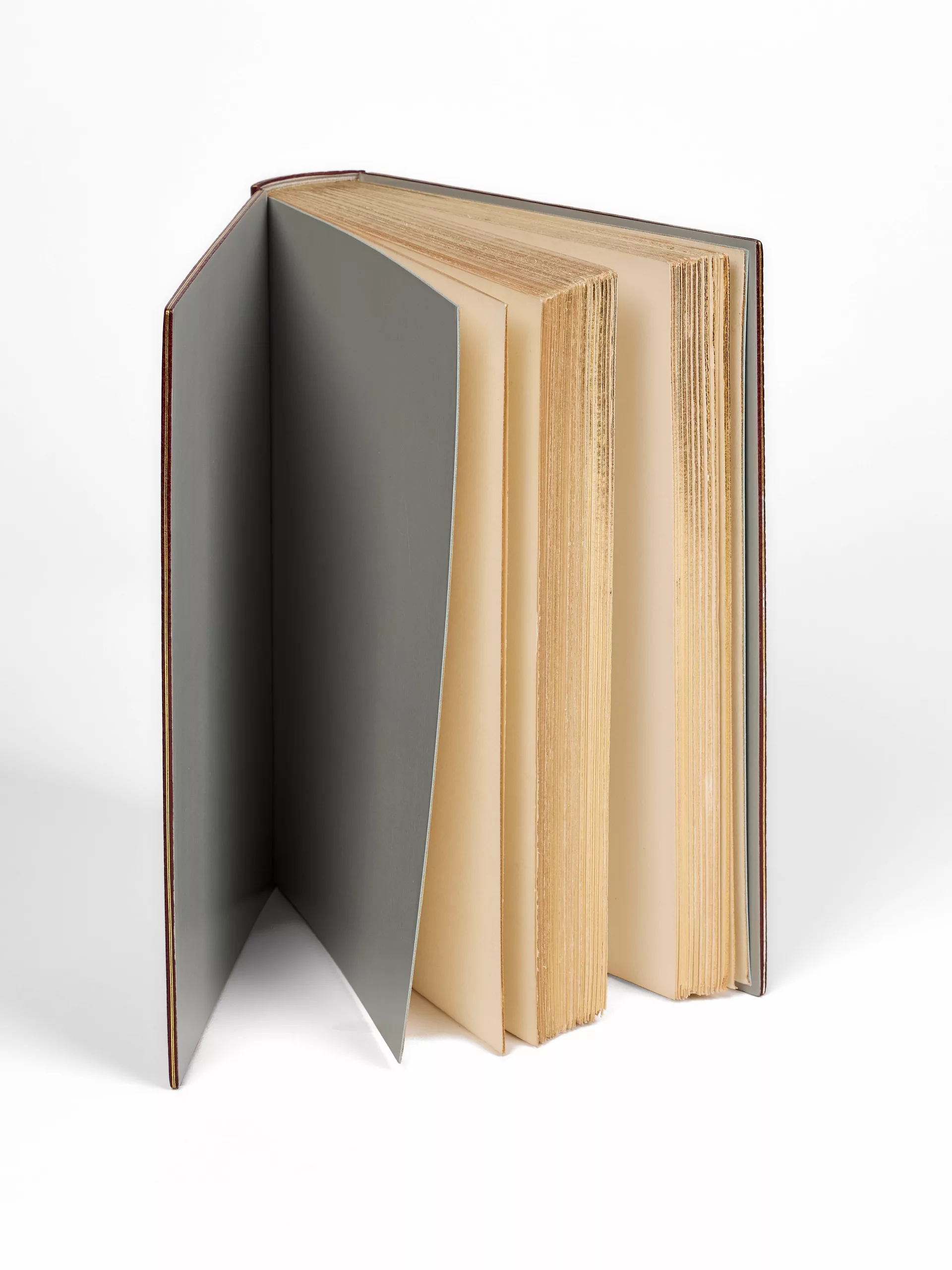
An exceptional copy, in a doublure-and-lining binding by one of the great twentieth-century binders: Pierre-Lucien Martin.