

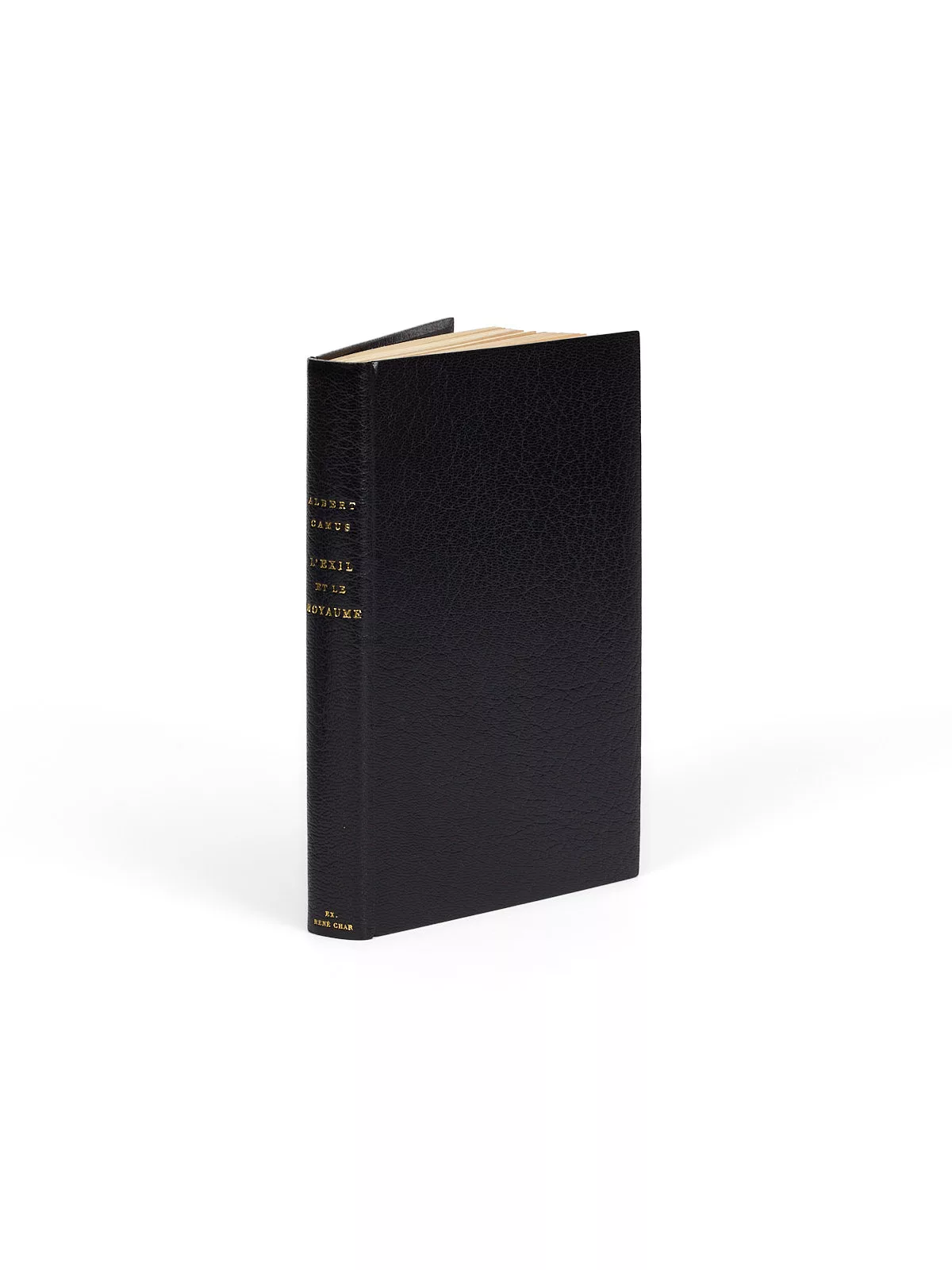
L’Exil et le Royaume
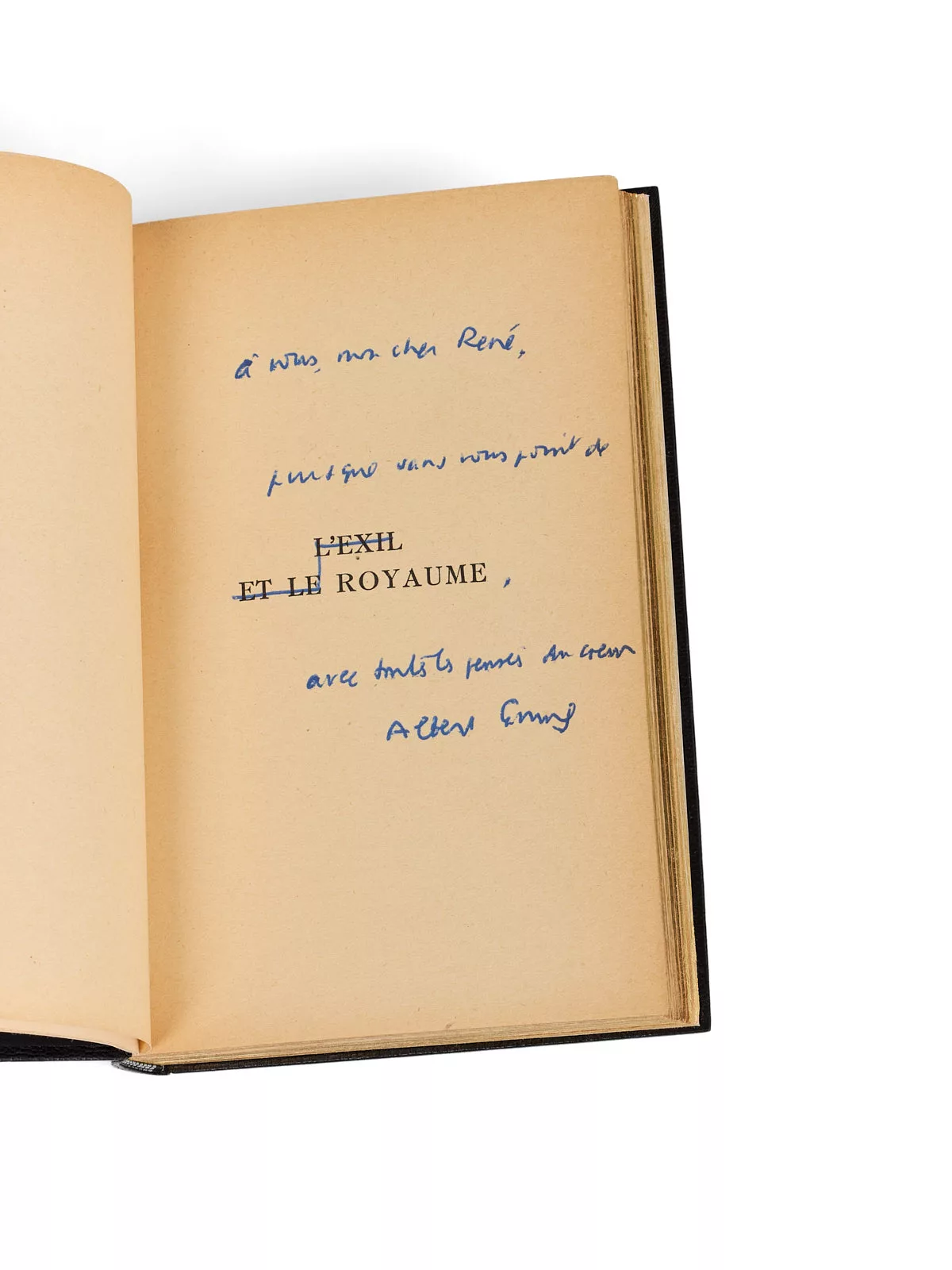
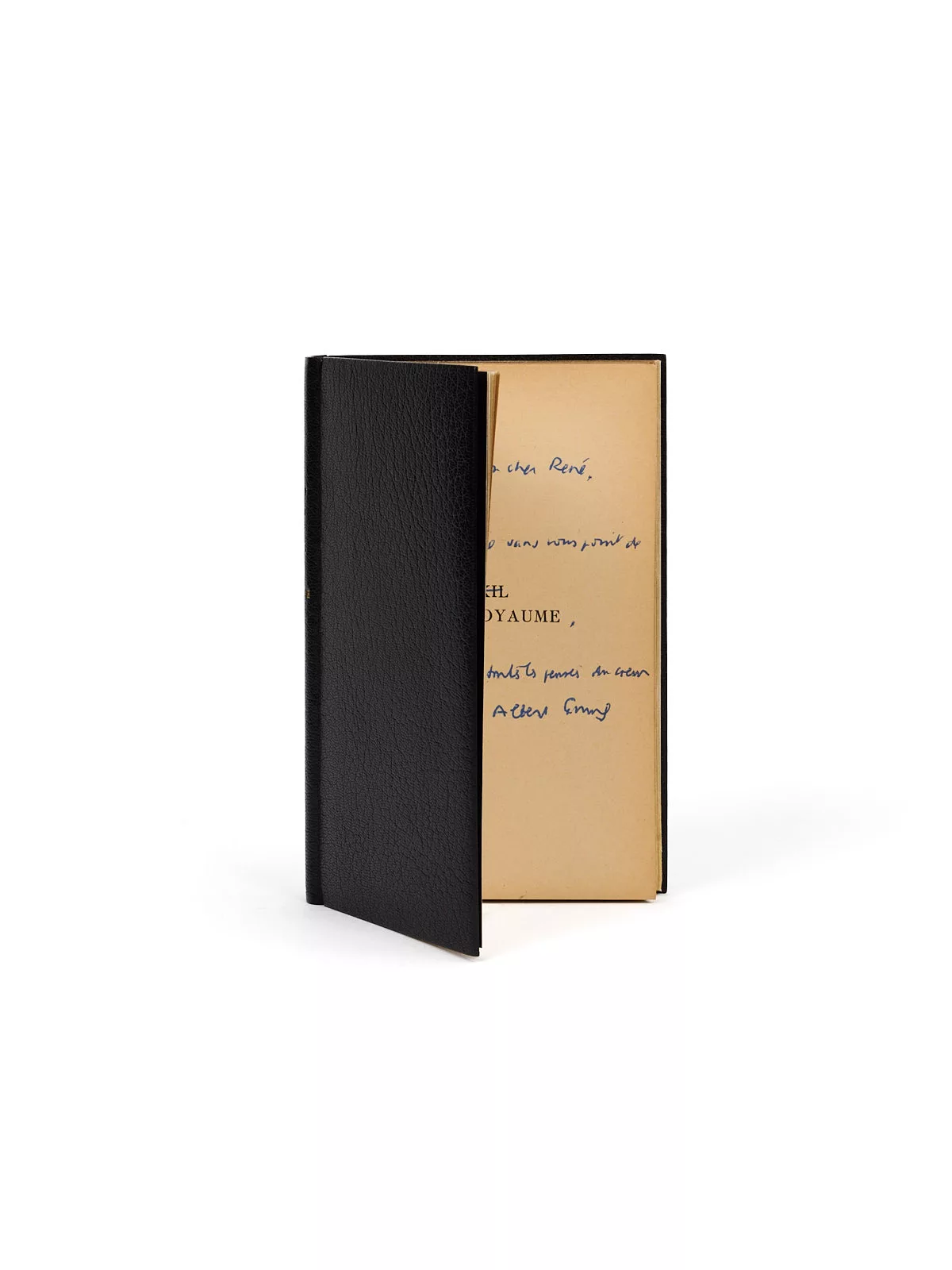
Presentation copy inscribed by Camus to René Char: “à vous, mon cher René [Char], puisque sans vous point de [ROYAUME], avec toutes les pensées du cœur. Albert Camus.”
The six stories of L’Exil et le Royaume (“La femme adultère,” “Le renégat,” “Les muets,” “L’hôte,” “Jonas” and “La pierre qui pousse”) were written between 1954 and 1955. La Chute was originally intended as a seventh story before Camus turned it into a full novel. A single theme — exile — is treated in six different ways, from interior monologue to realist narrative. The collection is dedicated, uniquely among Camus’s works, to his wife Francine, and presents “men and women in a state of perpetual questioning, if not introspection — true throughout, and perhaps most striking in Janine, the ‘adulterous woman,’ who seems exiled from herself and yet the agent of her own destiny. […] ‘L’hôte’ closes with a sentence of universal significance, one that says much about Camus himself: ‘In this vast country he had loved so much, he was alone.’ Almost a confidence about his own unhappiness.” (M. Aïssaoui, Dictionnaire amoureux d’Albert Camus, p. 164).
A precious copy of Camus’s last published work before he was awarded the Nobel Prize in Literature in October 1957: presented to his friend, the poet René Char.
Albert Camus and René Char shared a rare, strong and exemplary friendship, the kind one dreams of for a lifetime. “‘There are fertile encounters worth many a dawn,’ the poet wrote to the writer in October 1947. ‘What you may not fully realize is how much you are needed by those who love you and who, without you, would not amount to much,’ replied the author of Le Mythe de Sisyphe” (Dictionnaire amoureux, p. 92). Char first heard Camus’s name while in the maquis at Céreste. A friend gave him L’Étranger, but the encounter was missed at the time, since circumstances, as Char wrote, prevented him from giving the book of an unknown author the space of mind it deserved. The friendship that followed proved unfailing, “from always to always.” “Their correspondence is the finest ode to friendship […] Between these two men there is even something beyond friendship — indefinable, unshakeable, something resembling nobility of heart.”
On learning of the Nobel award, Char wrote to his friend, accompanying his letter with an object that gave it its full significance: “I hope, I believe that one is not told what will not happen. This assurance in the press already makes me rejoice without reservation and makes this Thursday, 17 October 1957, the best, the most illuminated, yes, the best day in a long while for me, among so many days of despair. Please accept, in memory of today, this small box which once saved my life in the Maquis and which I have kept as a truly intimate relic. I press your hand firmly, affectionately, fraternally” (17 October 1957, in Correspondance).
A precious and rare copy presented to his unfailing friend and “brother in spirit.”
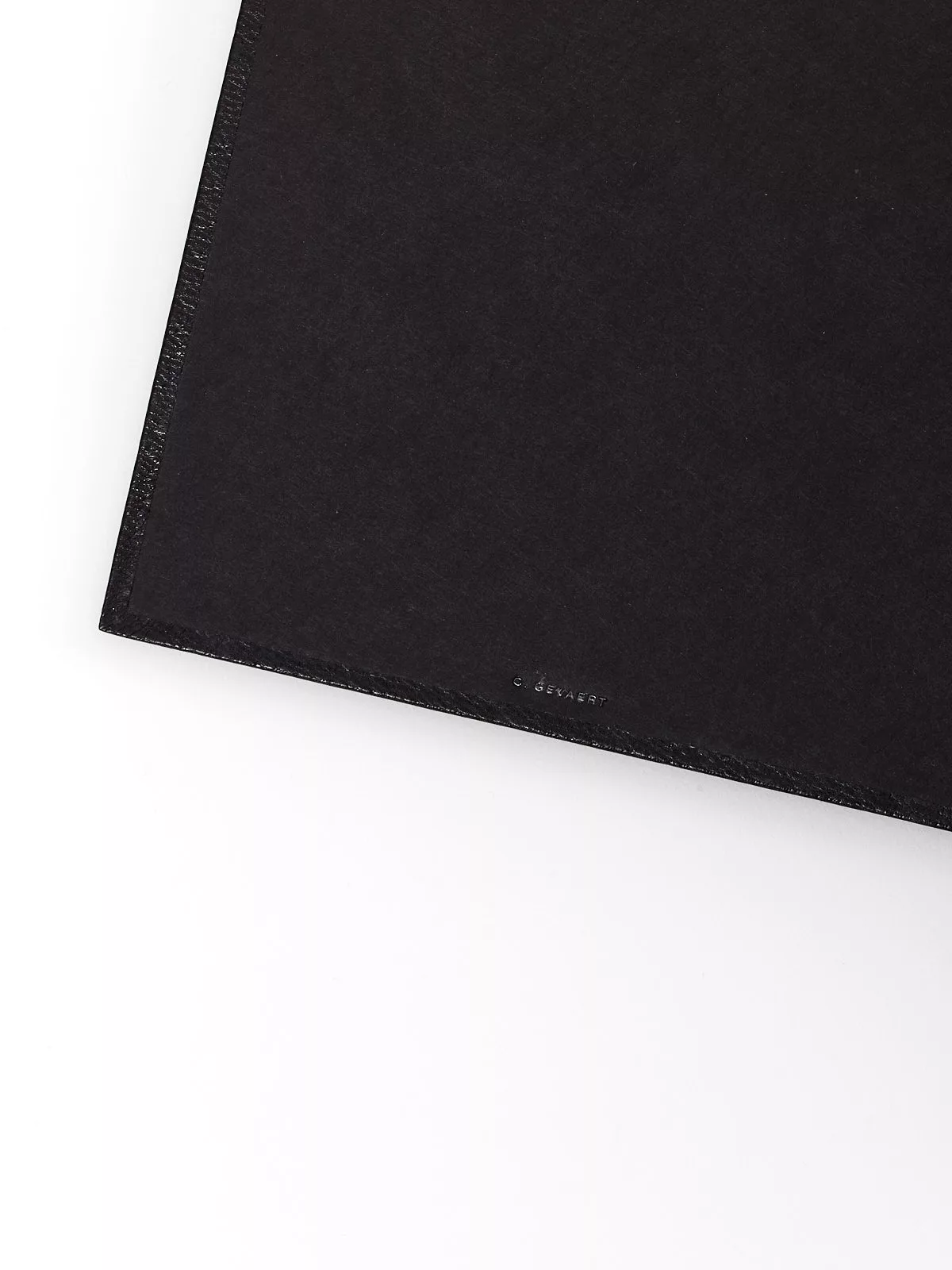
A perfect Jansenist binding by Clara Gevaert.