



Journal d’un curé de campagne
Regarded as Bernanos’s most popular and moving work, Le Journal d’un curé de campagne is among the last works of fiction he allowed himself to write. Along with Sous le soleil de Satan, it is his greatest novel.
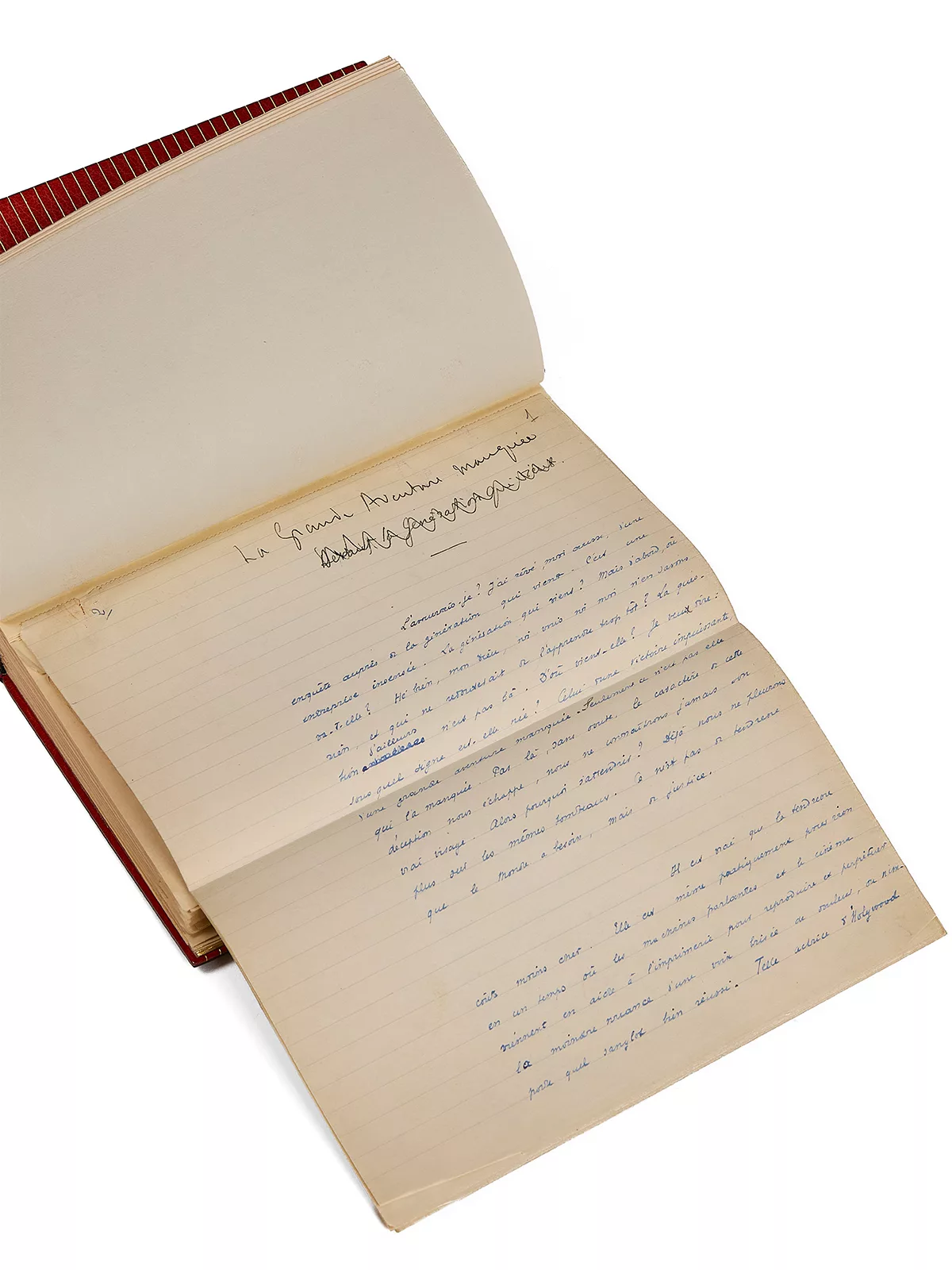
A precious copy, enriched with the autograph manuscript of “La grande aventure manquée,” devoted to the youth of the interwar years.
([c. November 1931]; 4½ pp. on the recto of quarto leaves folded in two and mounted on stubs, signed, with autograph corrections); followed by the newspaper clipping from Le Figaro in which the text was published, Friday, 20 November 1931.
On 11 November 1931, Le Figaro, then directed by the perfumer François Coty, published a notice announcing that a new contributor would sign “a series of studies on modern society” in its columns: Georges Bernanos. Then aged 44, he was already a celebrated writer thanks to his novel Sous le soleil de Satan. But the sensitive novelist was also a merciless pamphleteer. In La Grande peur des bien-pensants (1931), this passionate Catholic — an admirer of Drumont and Maurras (but also of the Commune), who had campaigned from a very young age in the ranks of Action française — violently attacked the bourgeoisie and the politicians of his day. In these forthcoming Figaro columns, he examined the psyche of his contemporaries with a pen both lively and bitter. On 13 November he wrote a first article entitled “Solitude de l’homme moderne,” followed by a second on 20 November: “La grande aventure manquée.”
After a lengthy polemic with Maurras in the pages of the newspaper — which caused his definitive break with Maurras and with Action française — Bernanos made one last striking intervention a year later, on 13 December 1932: a glowing review of Céline’s Voyage au bout de la nuit, which had just narrowly missed the Prix Goncourt.
For the 1974 reissue of Journal d’un curé de campagne, Malraux wrote a preface praising Bernanos’s creative operation, “imposing on the reader a passionate bond with an experience of which he is ignorant. Bernanos cannot imitate for his reader an inner life the reader does not know; men, priests, who elude him above all others. He will not convince him by forcing him to recognize what he reveals to him, but by drawing him into his own universe, as the masters of the fantastic do. He does not intend to be lifelike, but contagious: as Balzac and Stendhal were when they exalted ambition, as Dostoevsky was when he transfigured Stavrogin […] What Bernanos brings is of the order of the symphony: a furious praise of God, a furious exorcism of an inexhaustible Evil.” Just as no rule, no order from his superiors, could ever make the frail priest bend when he served the truth, nothing and no one could ever divert Bernanos from his “vocation.” Both followed a single rule: that of “fidelities without conformism, that is, living fidelities.”
Winner of the Grand Prix du roman of the Académie française, Le Journal d’un curé de campagne was adapted for the cinema by Robert Bresson in 1951.
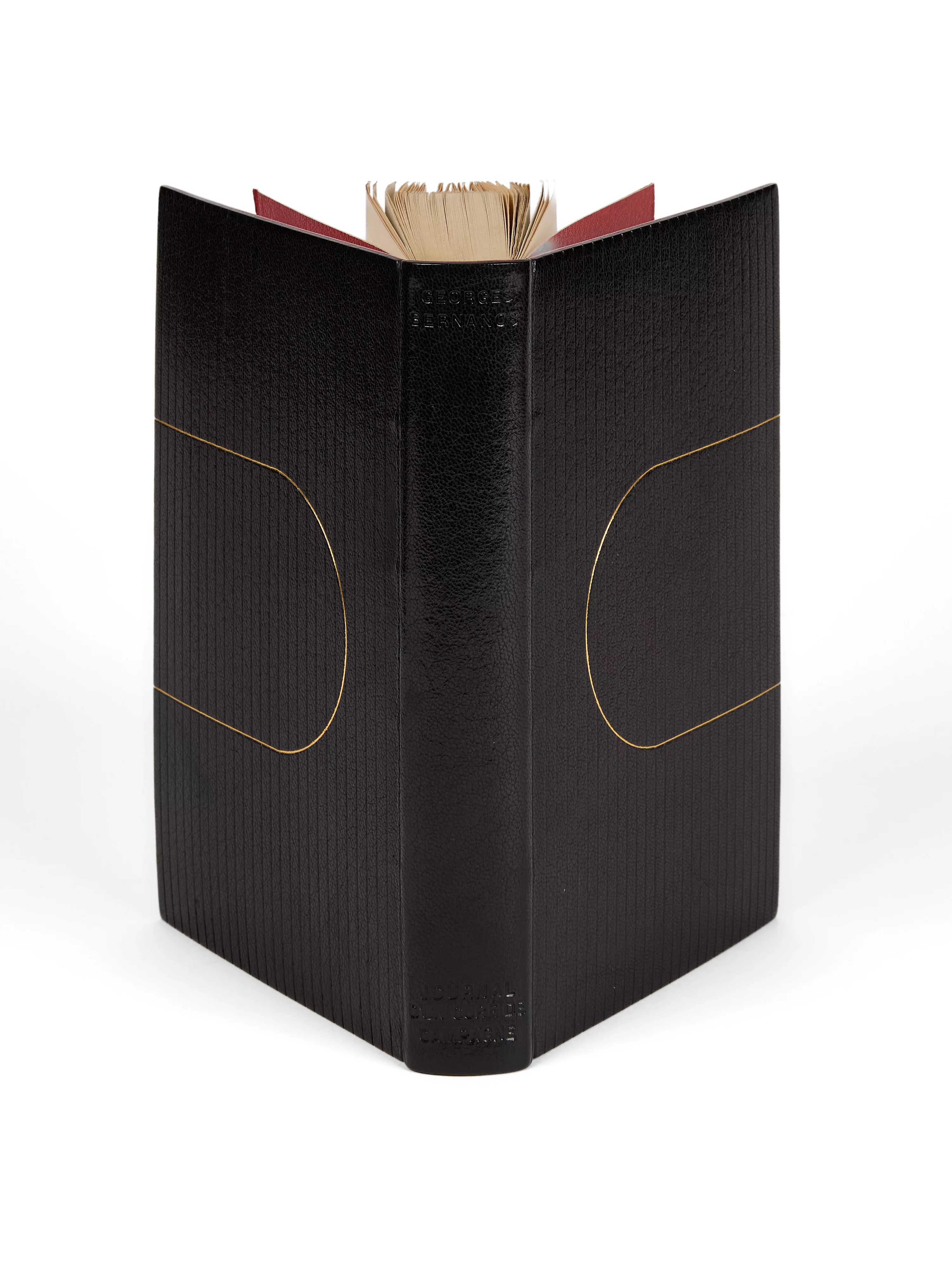
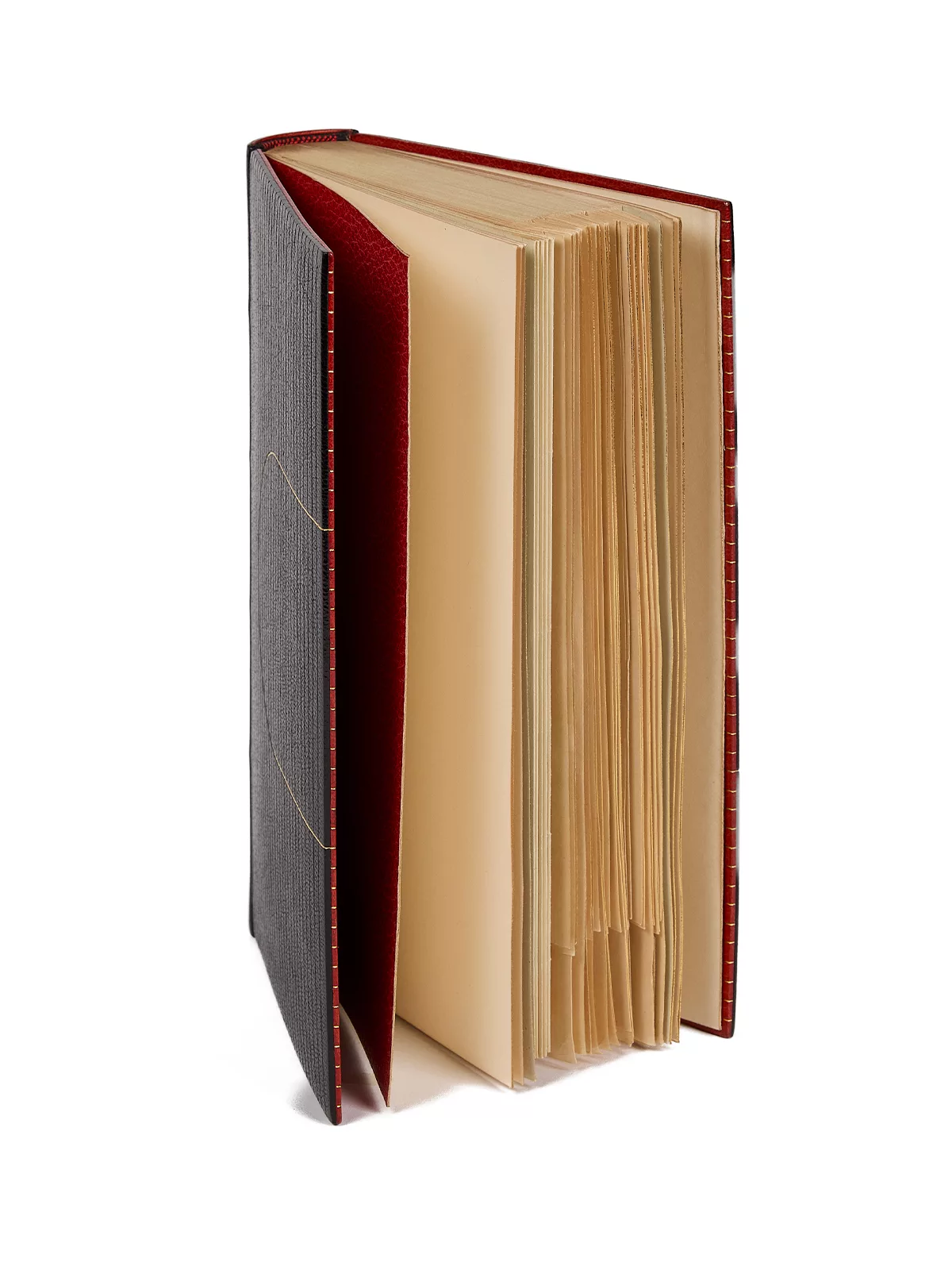
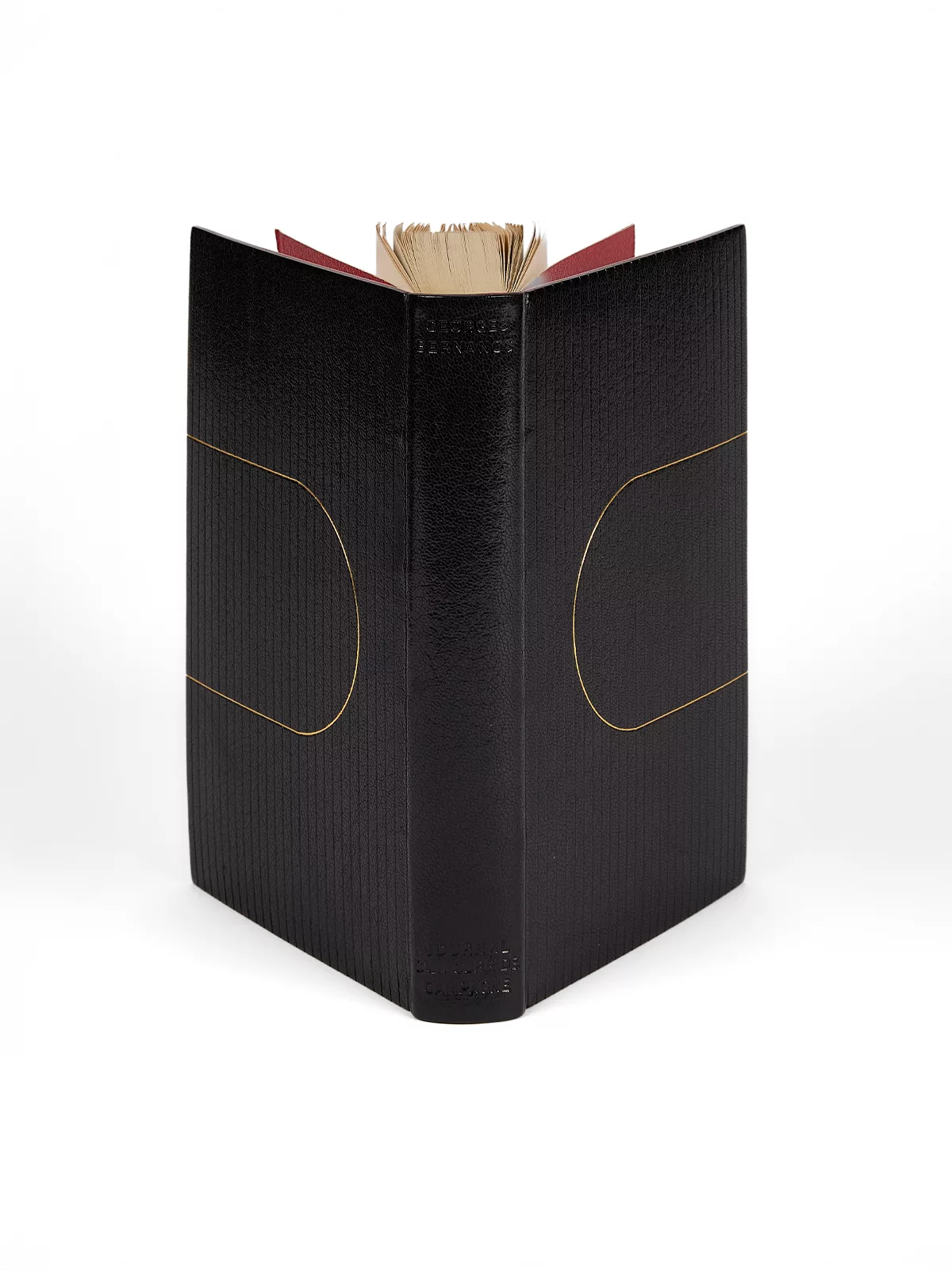
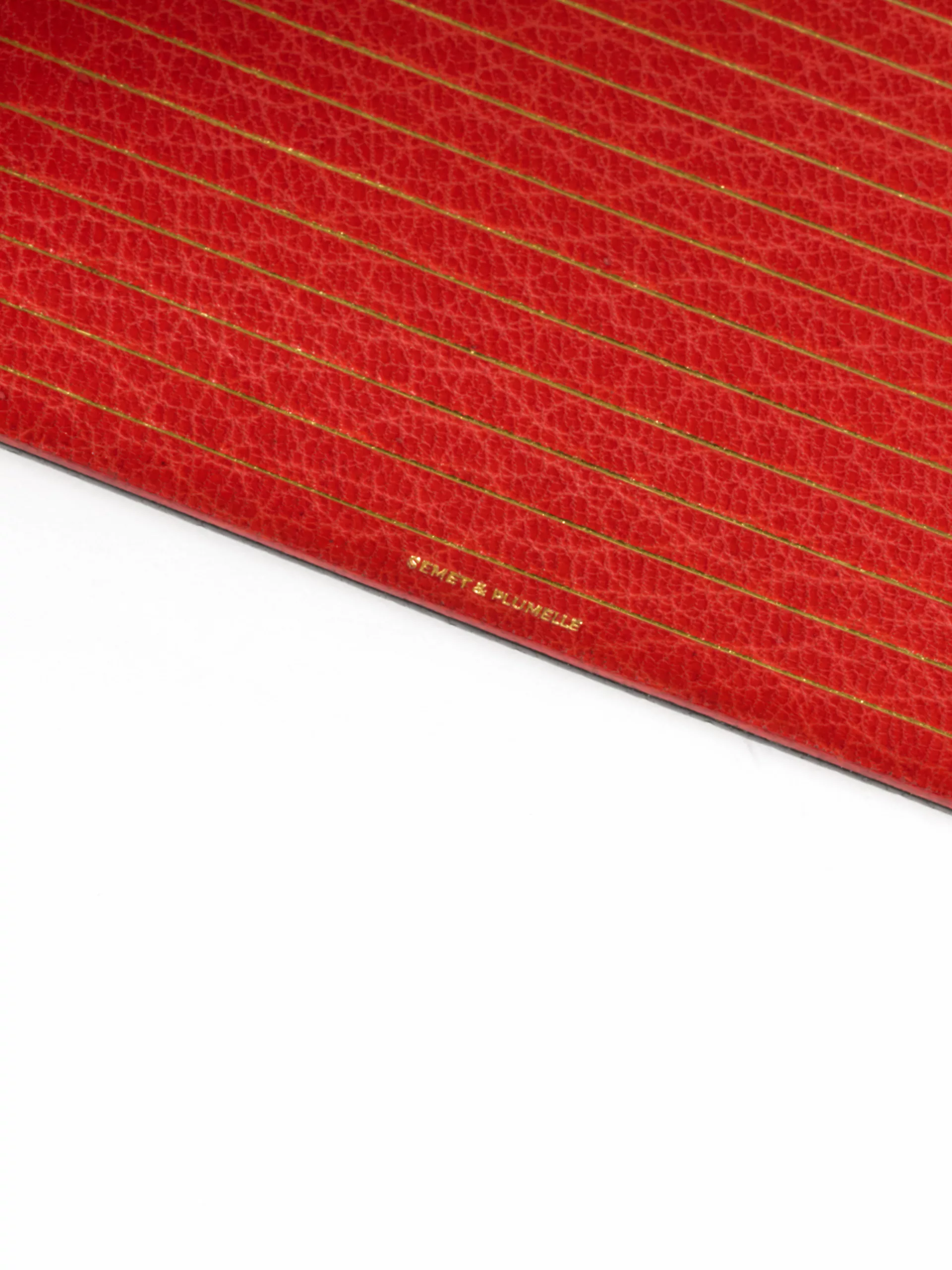
Probably one of the finest copies of this text, in a superb doublure binding by Semet et Plumelle, with a design by Alfred Latour: the son of a compositor-typographer at the Imprimerie nationale, Latour was one of the great bookbinding decorators of the last century. Trained briefly at the École nationale supérieure des Beaux-Arts and then, more significantly, at the École des Arts Décoratifs, he lived from the sale of his paintings and drawings from 1913, and after the war moved closer to the professionals of the “beau livre,” signing the illustrations of several works, chiefly in wood engraving. In 1935–1936 he joined the Union des Artistes Modernes: this movement of architects and decorators, founded in 1929 by Robert Mallet-Stevens in reaction against prevailing academicism, allowed him to bring a new spirit of modernity to his creations: in his posters, advertising inserts and bindings, Latour introduced geometry and color, along with his taste for rigor and restraint.
At the UAM pavilion at the 1937 Paris International Exhibition “Arts et Techniques dans la Vie moderne,” Latour was the only artist represented in all three sections: Livres d’art et Illustrations, Arts graphiques, and Publicité.
His binding designs were made chiefly for the workshop of Semet et Plumelle, who were less at ease with design work, usually entrusted to outside artists. Latour’s signed bindings are extremely rare, with only about twenty copies known.