

L’Insoutenable Légèreté de l’être
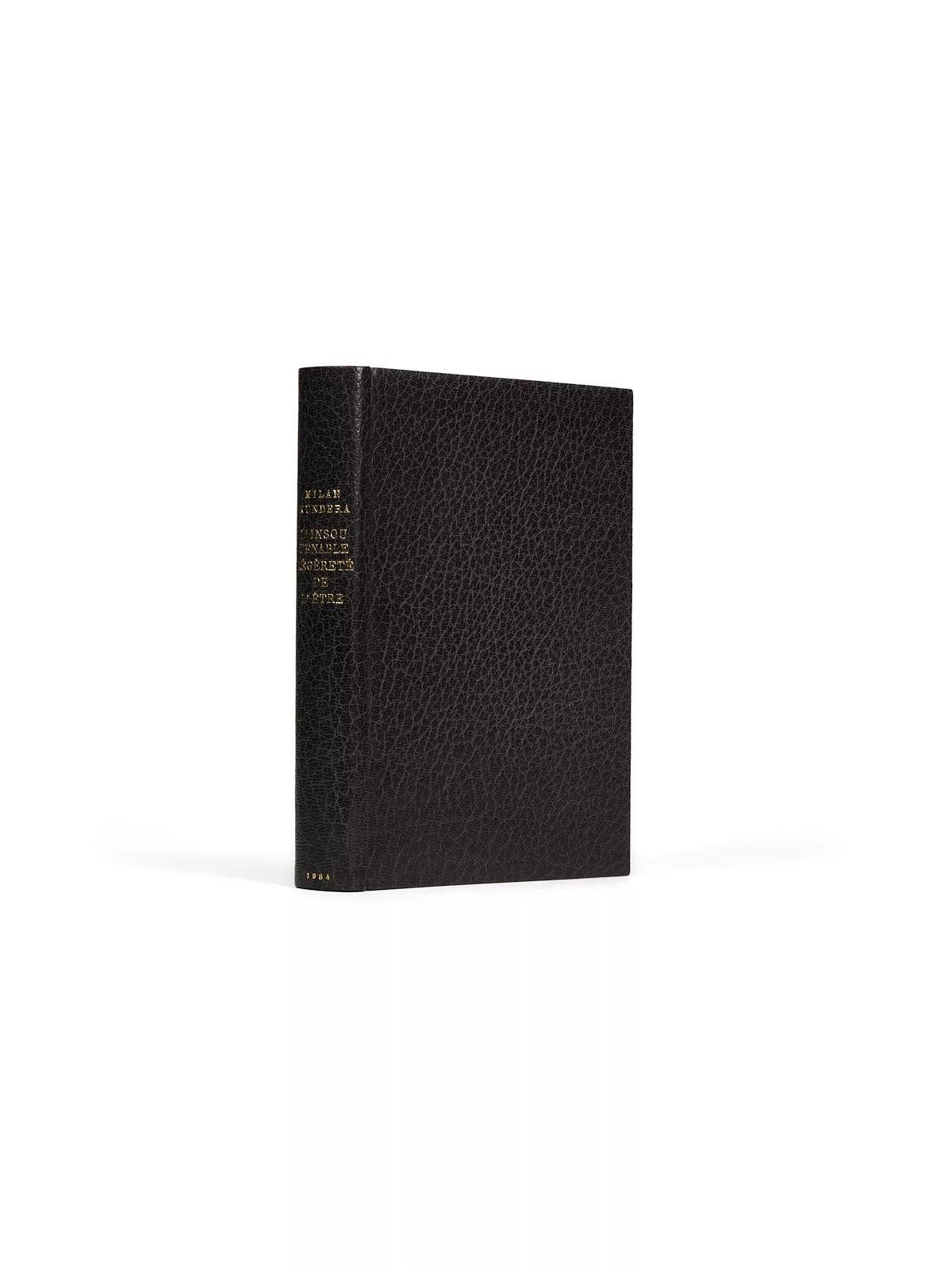
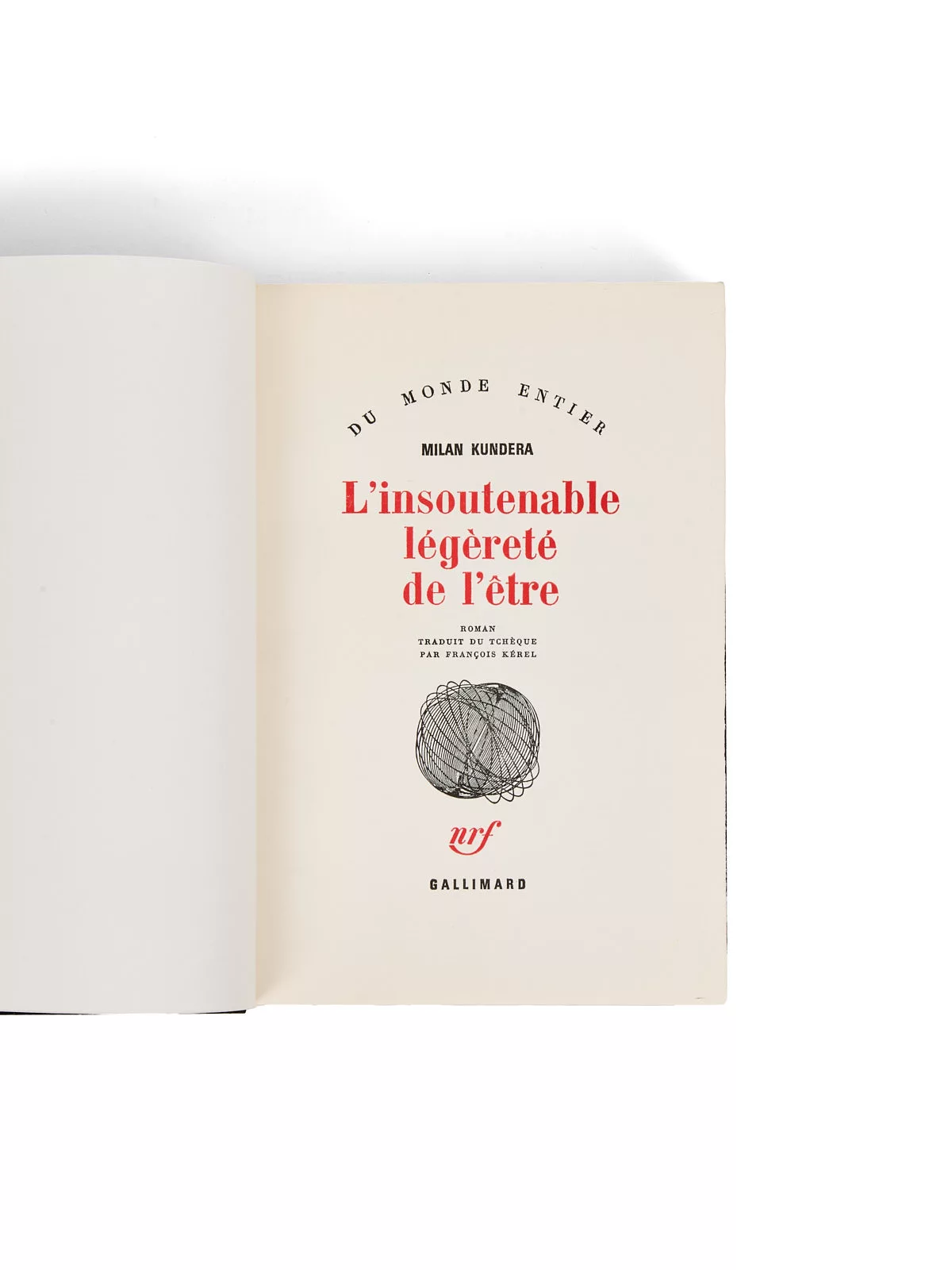
One of 23 deluxe copies on vélin d'Arches (no. 14), the only paper issue.
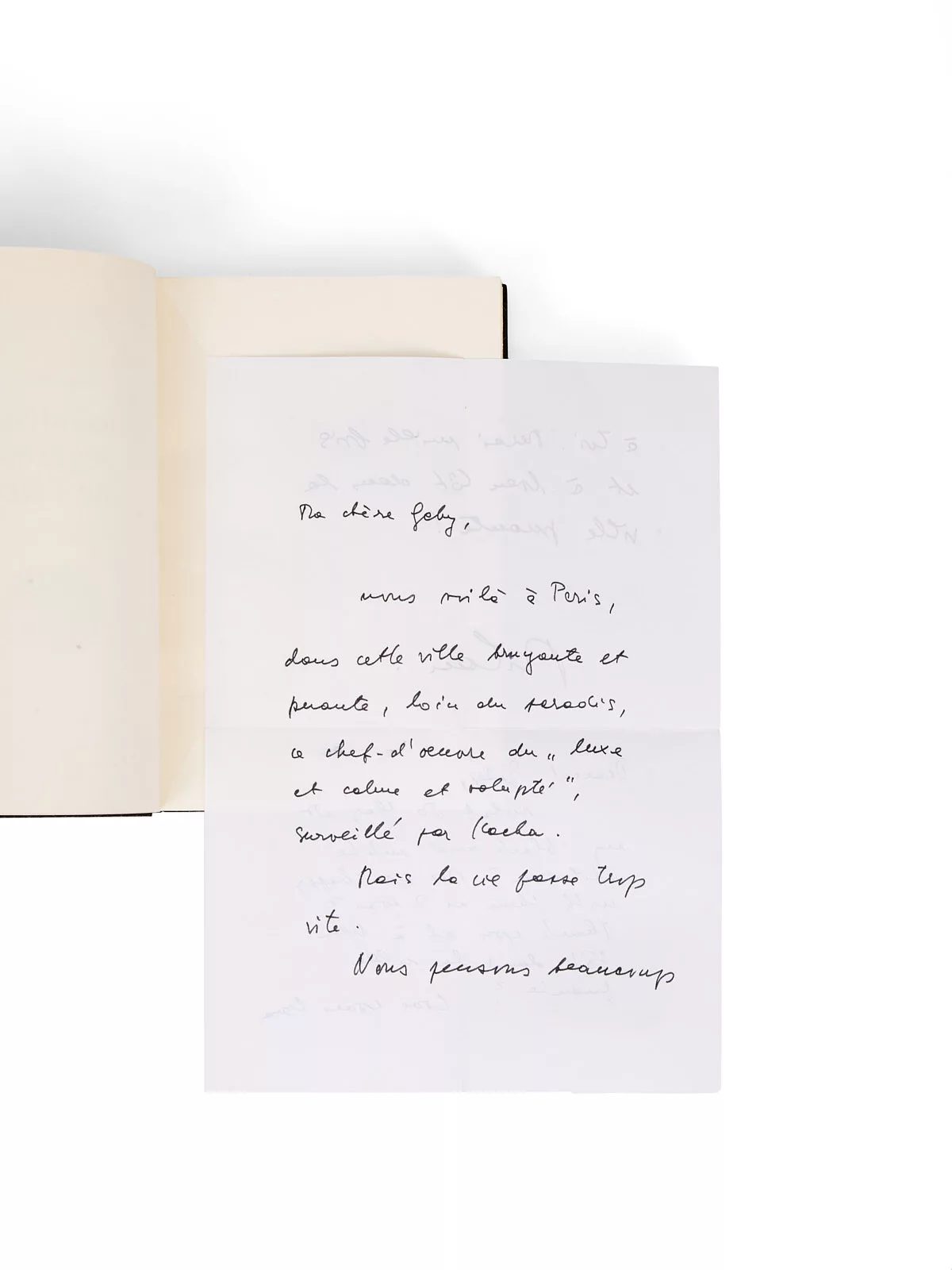
Autograph letter signed mounted at front.
To date, only fourteen authors have seen their works printed on bible paper in the celebrated Pléiade collection during their own lifetime, after having first served their apprenticeship in the equally famous — though increasingly crowded and less frequently printed on fine paper — “Collection blanche” for French writers and “Du monde entier” for foreign ones. Kundera is the most recent to join their ranks.
Bertrand Poirot-Delpech, with notable prescience, wrote of the novel on its publication: “A Parisian Czech since the Russian invasion of 1968, Milan Kundera is becoming one of the finest living examples of literary cross-fertilization. His latest novel brings to perfection the synthesis, begun with La Plaisanterie, Risibles Amours and La Valse aux adieux, between two European traditions of the philosophical tale: the Central European line running from Goethe to Kafka, Musil and Gombrowicz, and that of the eighteenth-century French conte, largely lost along the way and revived here by an author enriched by his forced, then chosen, exile (…). In the great reckoning that late twentieth-century Europe is imposing on its beliefs in man and history, one must henceforth reckon with Kundera’s sumptuous skepticism, which excludes neither gaiety nor tenderness” (Le Monde, 27 January 1984).
Accompanied by an autograph letter signed by Milan and Véra Kundera, addressed to a certain “Gaby,” again invoking Kafka: the couple tells her of their arrival in Paris, “this noisy and stinking city, far from the paradise, that masterpiece of ‘luxe, calme et volupté’ watched over by Kafka. But life passes too quickly,” Kundera laments. A note follows in English from Véra: “What do they do my black and white children? Are u happy with them as I was? Thank you et à bientôt dans la ville puante? Love, Yours, Vera.”
A magnificent copy.