

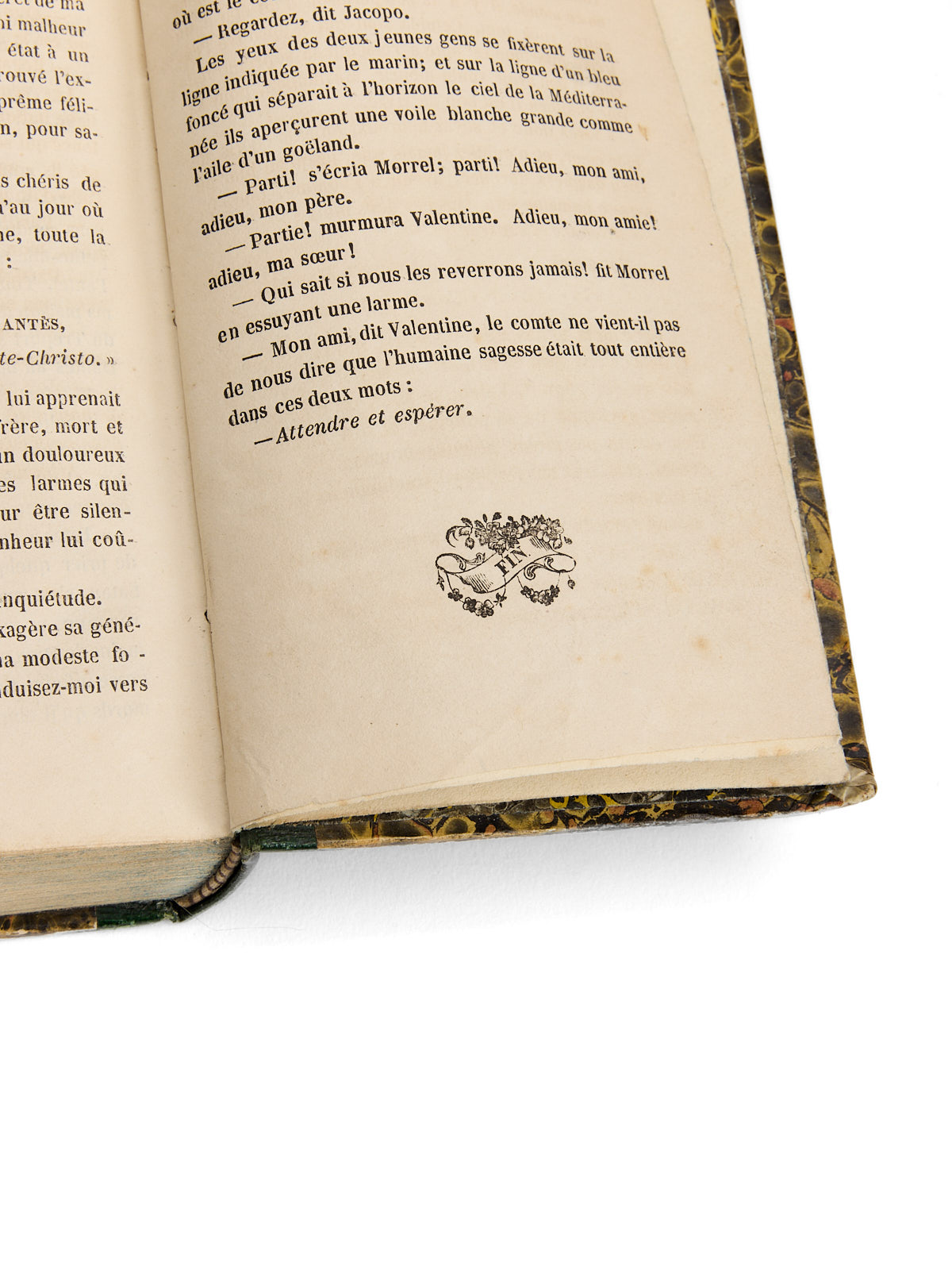
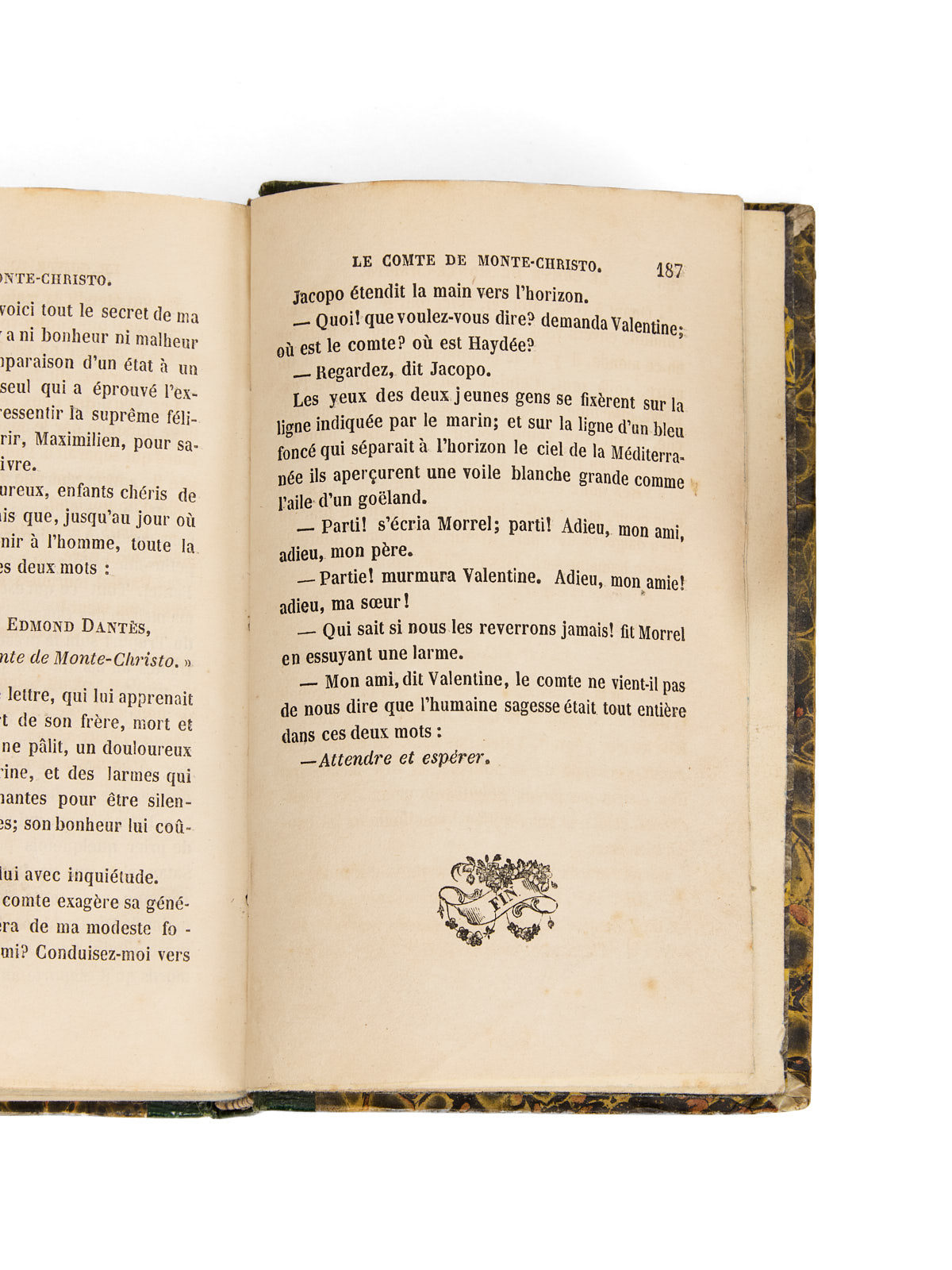
Le Comte de Monte-Christo
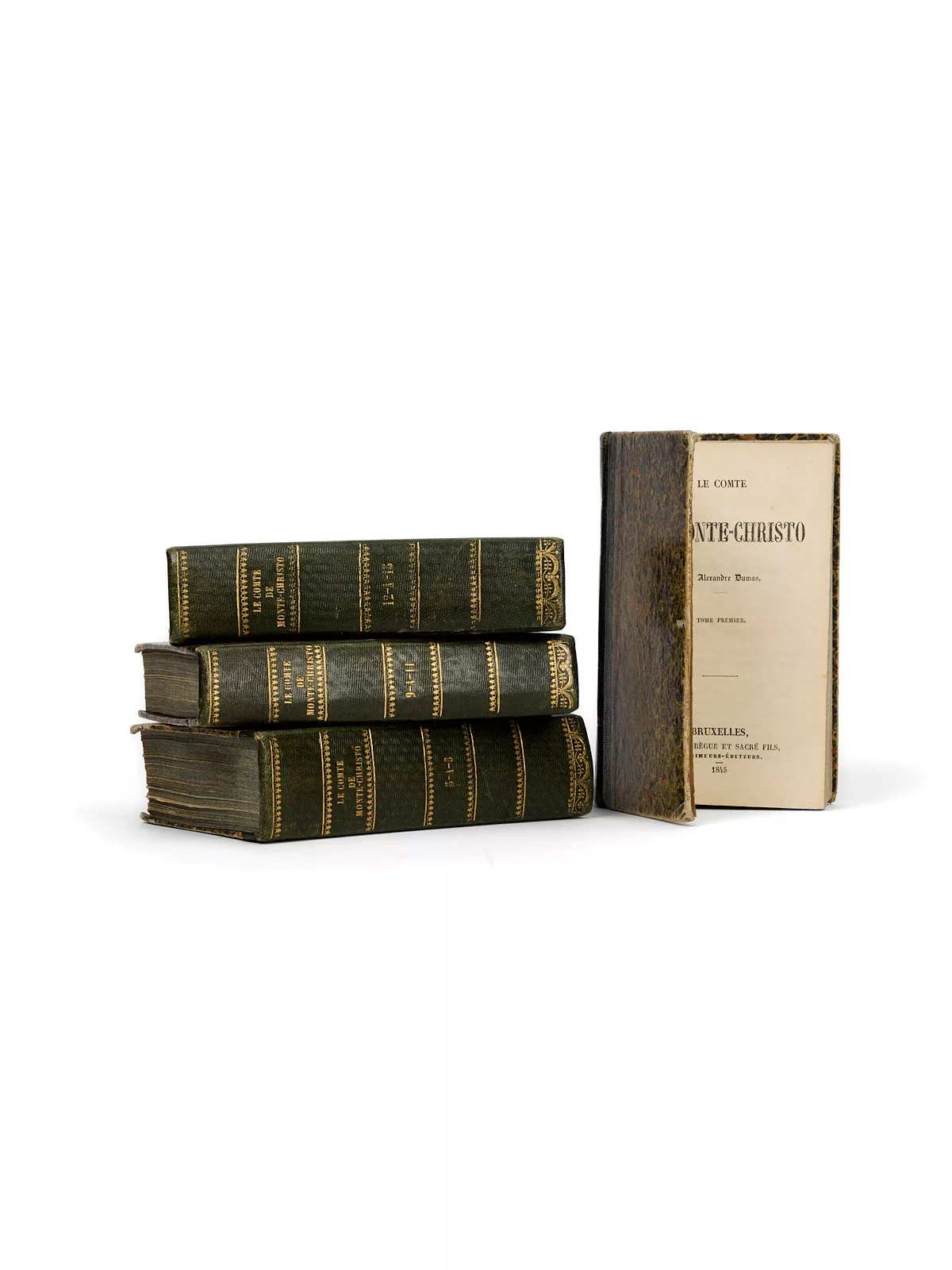
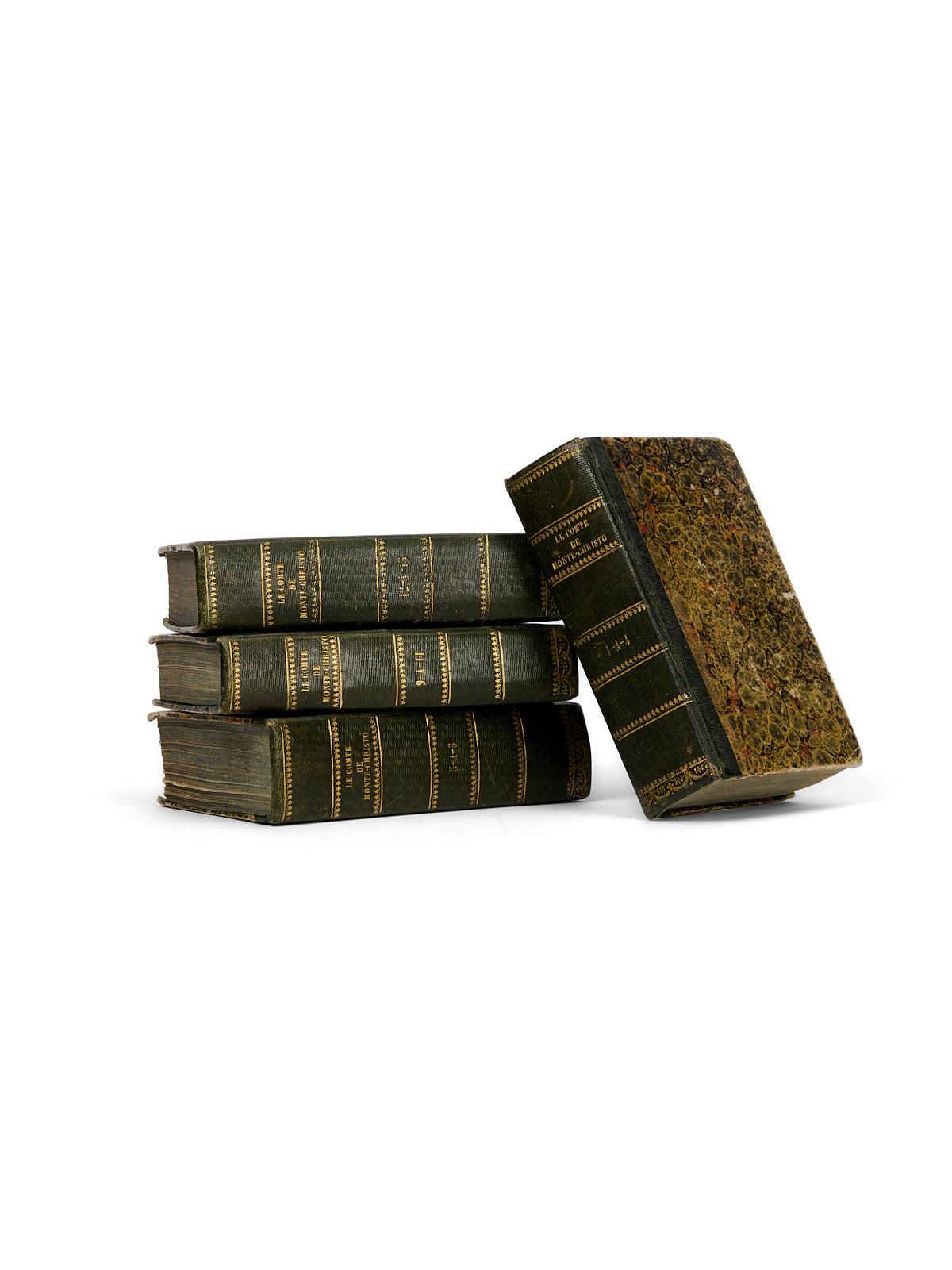
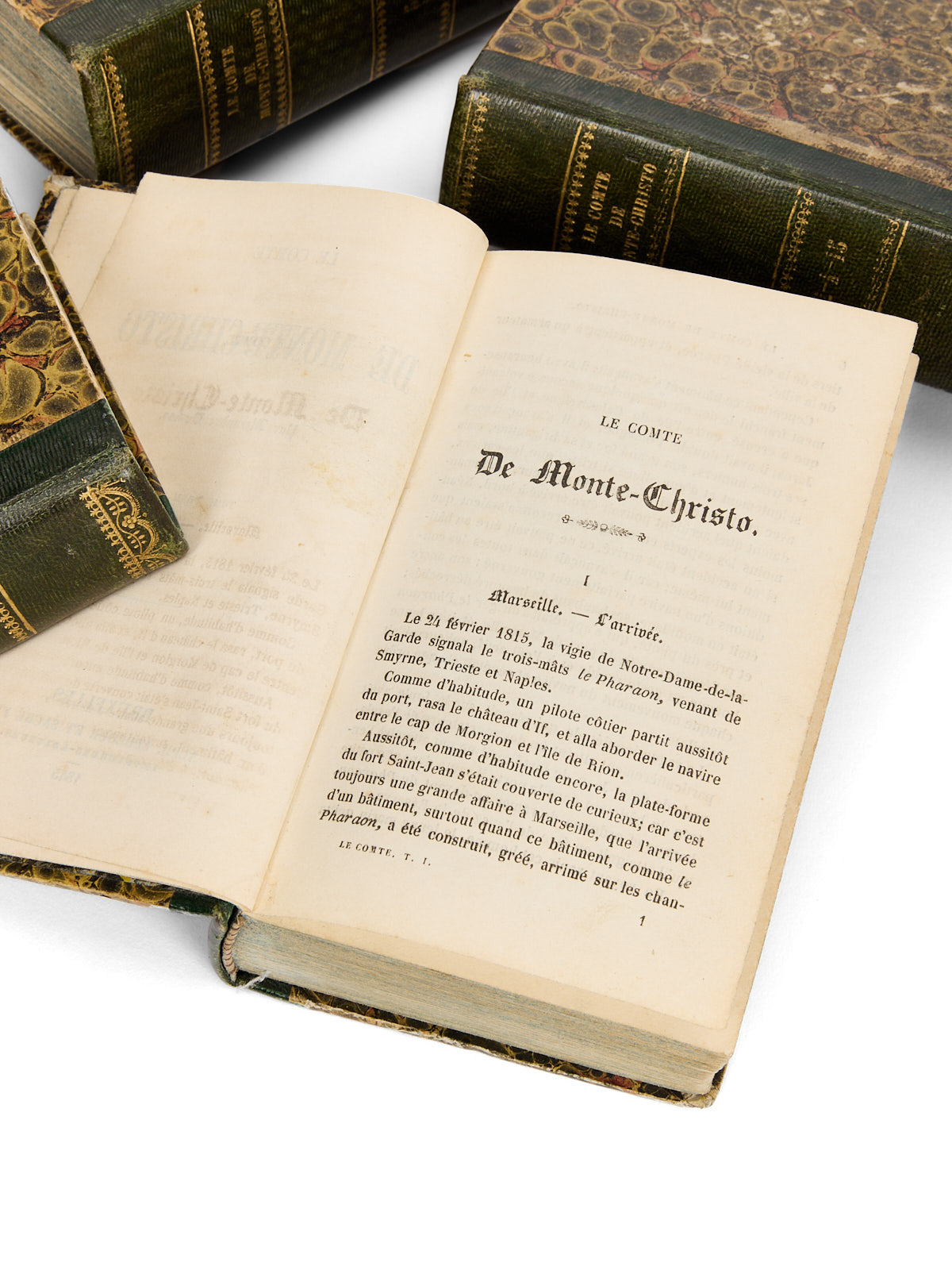
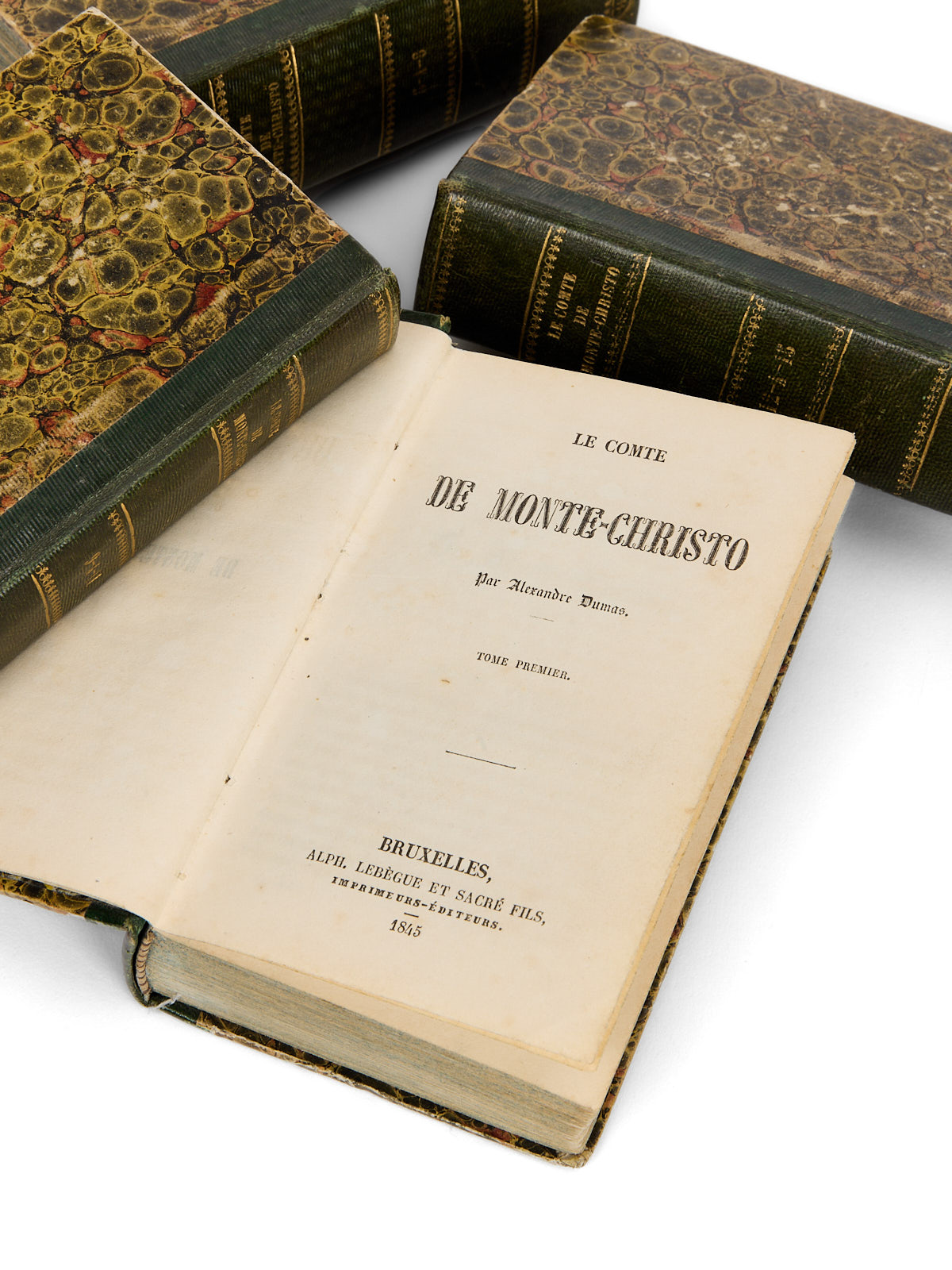
Rare fifteen-volume edition, printed by Alphonse Lebègue. It uses the incorrect title Monte-Christo, which was not corrected until the following year.
‘Wait and hope’ is the wisdom of Edmond Dantès. This proud sailor, first mate of the merchant three-masted ship Le Pharaon, is about to be named captain and marry his beloved, Mercédès. Jealous of his rise and marriage, the accountant Danglars and Fernand Mondego, Mercedes’ cousin and lover, plot to anonymously denounce Dantès as a Bonapartist conspirator. Arrested, he is imprisoned in the Château d’If and will wait fourteen years for his deliverance and revenge. It will be terrible. His old cellmate, Abbé Faria, revealed his secret to him and a fabulous treasure that he made his own after his spectacular escape. Edmond Dantès, now rich, took on the persona of the Count of Monte Cristo, who succeeded in turning ‘that savage justice, which laws cannot extirpate from the human heart’ into a work of art: the expression borrowed from Alex Baudouin, the anonymous author of the Dictionnaire des vanités (1818), applies perfectly to the hero of Alexandre Dumas’ novel.
The first two parts were published in Le Journal des Débats from 28 August to 26 November 1844, followed by the third and final part from 20 June 1845 to 15 January 1846, under the incorrect title ‘Christo’ instead of ‘Cristo’. Admiringly, George Sand wrote that it must have taken ‘excesses of life to renew this enormous source of life’.
On 28 September 1845, Le Siècle reprinted the text and published it in weekly instalments, while the true original edition of The Count of Monte Cristo appeared shortly afterwards, published by Pétion, then Baudry, and dated 1845-1846: eighteen volumes, often bound together in nine octavo volumes.
Complete copies of the original edition in good condition are extremely rare, with the Bibliothèque nationale de France only having a complete series since the acquisition in 1989 of the Sicklès copy (II, no. 313). Reprints, following the Pétion-Baudry edition, followed immediately.
Foremost among these were the ‘Belgian counterfeits’: these printers escaped French regulations and, based on a Dutch law of 25 January 1817, claimed that ‘any work that belongs to all nations belongs to no one in particular’; They therefore had the chapters of these novels printed as they appeared, the day after or a few days after their publication in the newspapers, and once printing was complete, these printer-publishers launched a low-cost edition on the French market, generally riddled with typographical errors, well before the official publisher could launch the genuine original edition. These pirate prints – which Fernand Vandérem, editor of the Bulletin du bibliophile, referred to in 1926 as ‘prefaçons’ – were a real scourge that plagued French bookshops during the first half of the 19th century.
We know of four other Belgian counterfeits published at the same time in 1845 and 1846: those by Méline et Cans (in 8 volumes), the Société typographique belge (13 vols.), the Société belge de librairie, Hauman et Cie (in 8 vols.), and the one published jointly in Brussels and Leipzig by Charles Muquardt (8 volumes): all were published by copying the serialised instalments and even before the novel had been published in its entirety; for this reason, they are all spelled Monte-Christo instead of Monte-Cristo: this error was only corrected in Pétion’s second edition of 1846.
Given the extreme rarity of the original French edition, these earlier or contemporary counterfeits have become rare and highly sought after.
A fine copy, in very good condition, with its original binding.
Only volume 1 has retained its title page, dated 1845. All volumes were published on that date, except for the last one, which was published in 1846.
Munro, Alexandre Dumas père, a bibliography of works published in French, Carteret, I, 236; Talvart, no. 70A; Vicaire, III, 365; Clouzot 54 (for the first edition).