

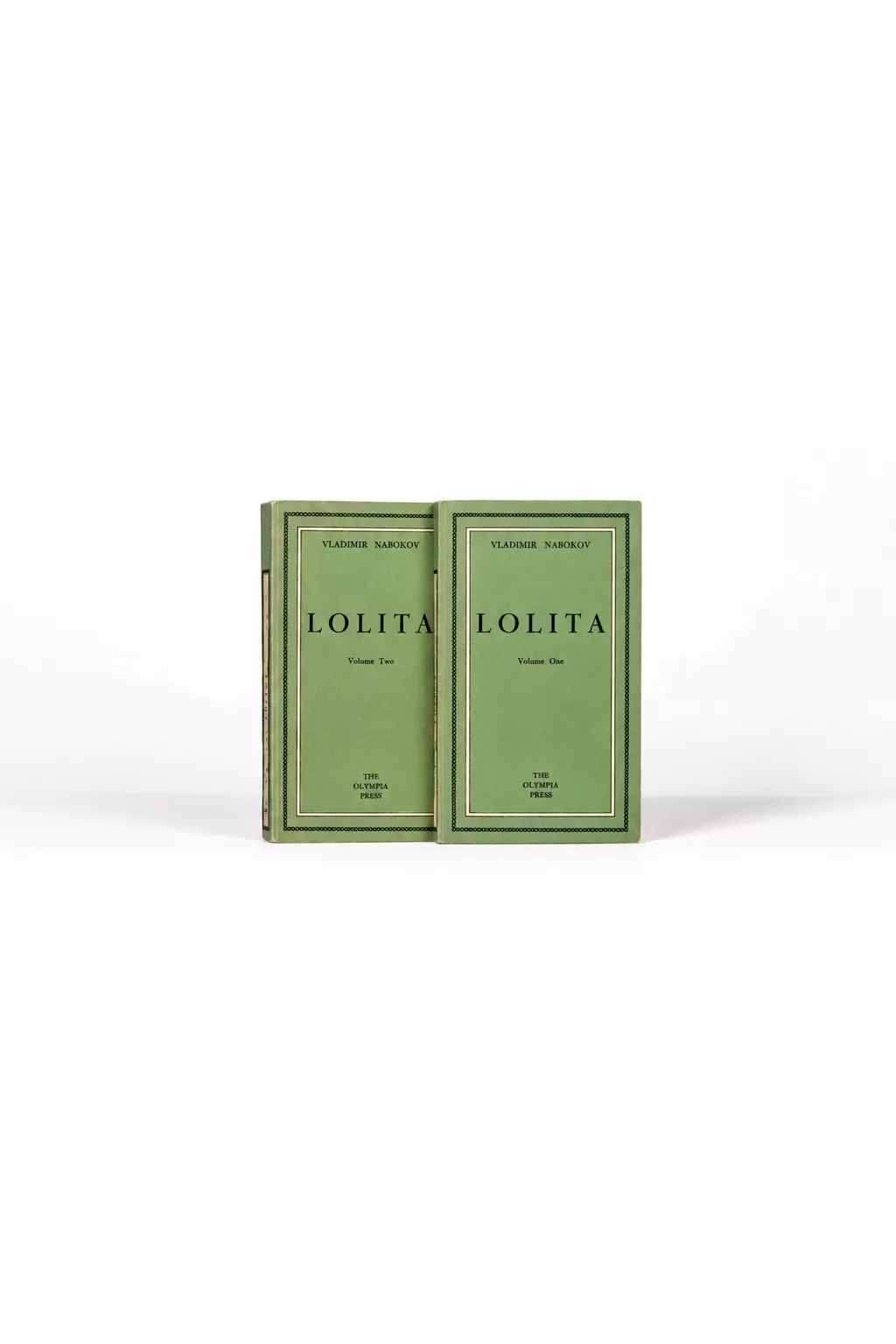
Lolita
“Lolita…” Three syllables for a novel that almost never appeared and would scandalize the literary establishment. Discouraged by his inability to complete the manuscript, Nabokov at one point attempted to burn it; his wife Véra rescued it from the flames.
Once completed, Lolita was submitted to several American publishers, all of whom rejected it, largely for fear of prosecution. Like Joyce’s Ulysses and Henry Miller’s Tropic of Cancer before it, a major work written in English would therefore receive its first publication in France.
It was Maurice Girodias who finally published Lolita under his Olympia Press imprint in Paris in 1955. The novel soon became the subject of censorship and controversy, while Nabokov himself remained ambivalent about being associated with a publisher whose list included numerous sexually explicit titles. At the same time, he was acutely conscious of his position as a professor at Cornell University.
The controversy did little to halt the book’s extraordinary trajectory. Lolita would become Nabokov’s masterpiece and one of the defining novels of twentieth-century literature, celebrated as much for the virtuosity of its language and narrative construction as debated for its disturbing subject.
A very fine copy of the true first edition, first printing